Pastoral Landscape with Ruins and a Ford (1722): Art, History and Details
Pastoral Landscape with Ruins and a Ford at the Cleveland Museum of Art: 1722, etching and open-bite on laid paper. Explore the work's context, creator attribution and collection history.
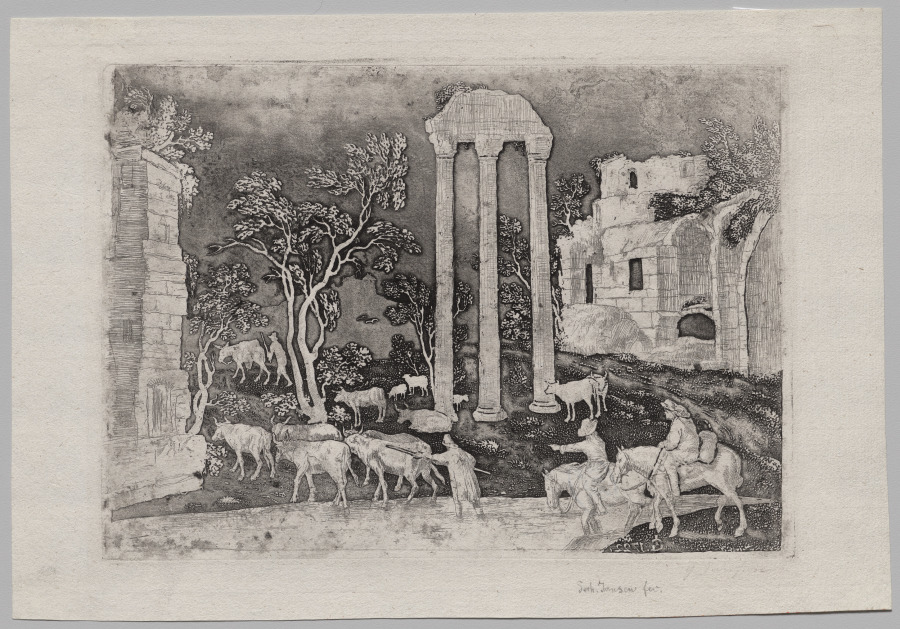
Pastoral Landscape with Ruins and a Ford (1722) is in the Cleveland Museum of Art collection. The museum's creator attribution is Gerhardt Janssen (Dutch, 1636–1725).
The work and its context
The museum's open-access catalogue describes the work:
Janssen’s prints depict figures, trees, and architectural details rendered light against a dark background, a reverse effect of the typical etching of the period, which reminds our modern eye of a photographic negative. The artist might have been familiar with such a reversal of light and dark through the practice of reverse glass painting, in which he was trained, and indeed, the figures glow with an idiosyncratic solarizing effect, almost as if they are part of a window. The technique was apparently invented by Janssen and is unique in early modern art.
Object facts
- Title: Pastoral Landscape with Ruins and a Ford
- Date: 1722
- Creator attribution: Gerhardt Janssen (Dutch, 1636–1725)
- Culture: Netherlands
- Type: Print
- Technique: etching and open-bite on laid paper
- Dimensions: Image and Plate: 15.8 x 22.2 cm (6 1/4 x 8 3/4 in.); Sheet: 19.2 x 28.1 cm (7 9/16 x 11 1/16 in.)
- Collection: PR - Etching
- Department: Prints
- Accession number: 2022.51
A detail from the museum
This print was made from an iron print plate that was etched in acid in stages, creating a textured, almost corrosive effect.
Collection credit
Jo Hershey Selden Fund
Further reading listed by the museum
- Roethlisberger, Marcel. “The Prints of Gerhardt Janssen.” Print Quarterly 4, no. 3 (1987).
View the collection record
See the museum's photographs and full catalogue entry. Catalogue text is reproduced from the Cleveland Museum of Art's open-access data, with HTML formatting removed. This object and its supplied image are designated CC0.
Sources
More in Lifestyle
Keep reading