Peaches and Bats (late 1600s–1700s): Art, History and Details
Peaches and Bats at the Cleveland Museum of Art: late 1600s–1700s, greenish-white jade. Explore the work's context, creator attribution and collection history.
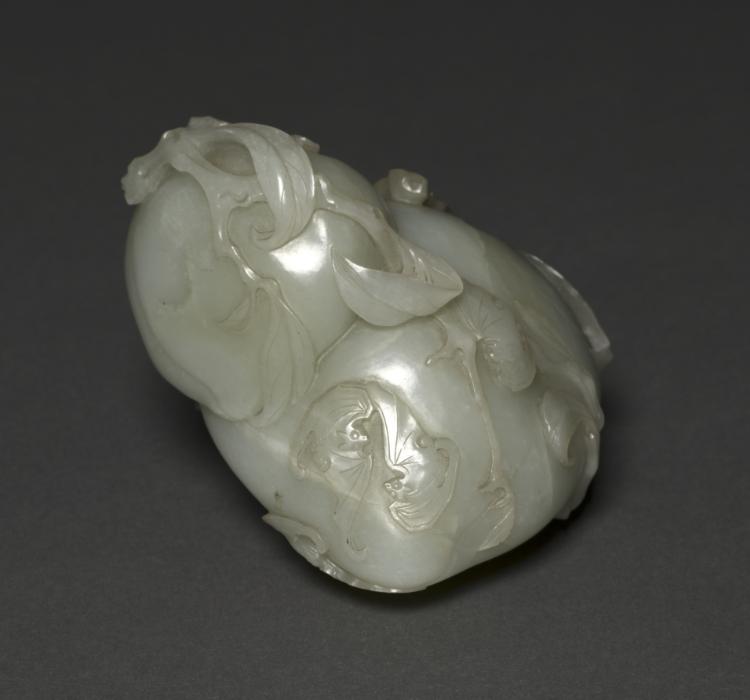
Peaches and Bats (late 1600s–1700s) is in the Cleveland Museum of Art collection.
The work and its context
The museum's open-access catalogue describes the work:
This white jade is carved as a double peach with realistically detailed leaves and branch following the curve of the jade. Clinging to the edge are a pair of bats, which represent good fortune.
Object facts
- Title: Peaches and Bats
- Date: late 1600s–1700s
- Culture: China, Qing dynasty (1644–1911)
- Type: Jade
- Technique: greenish-white jade
- Dimensions: Overall: 9.9 x 13.5 x 11.5 cm (3 7/8 x 5 5/16 x 4 1/2 in.)
- Collection: China - Qing Dynasty
- Department: Chinese Art
- Accession number: 2006.141
A detail from the museum
This jade sculpture was given to the museum in memory of John D. Rockefeller and his family.
Collection credit
Gift of William Kelly Simpson in memory of his wife Marilyn M. Simpson and her grandparents Mr. and Mrs. John D. Rockefeller Jr.
View the collection record
See the museum's photographs and full catalogue entry. Catalogue text is reproduced from the Cleveland Museum of Art's open-access data, with HTML formatting removed. This object and its supplied image are designated CC0.
Sources
More in Lifestyle
Keep reading
Related stories