Pediment with the Face of Glory (Kirti-mukha) (c. 1000s): Art, History and Details
Pediment with the Face of Glory (Kirti-mukha) at the Cleveland Museum of Art: c. 1000s, sandstone. Explore the work's context, creator attribution and collection history.
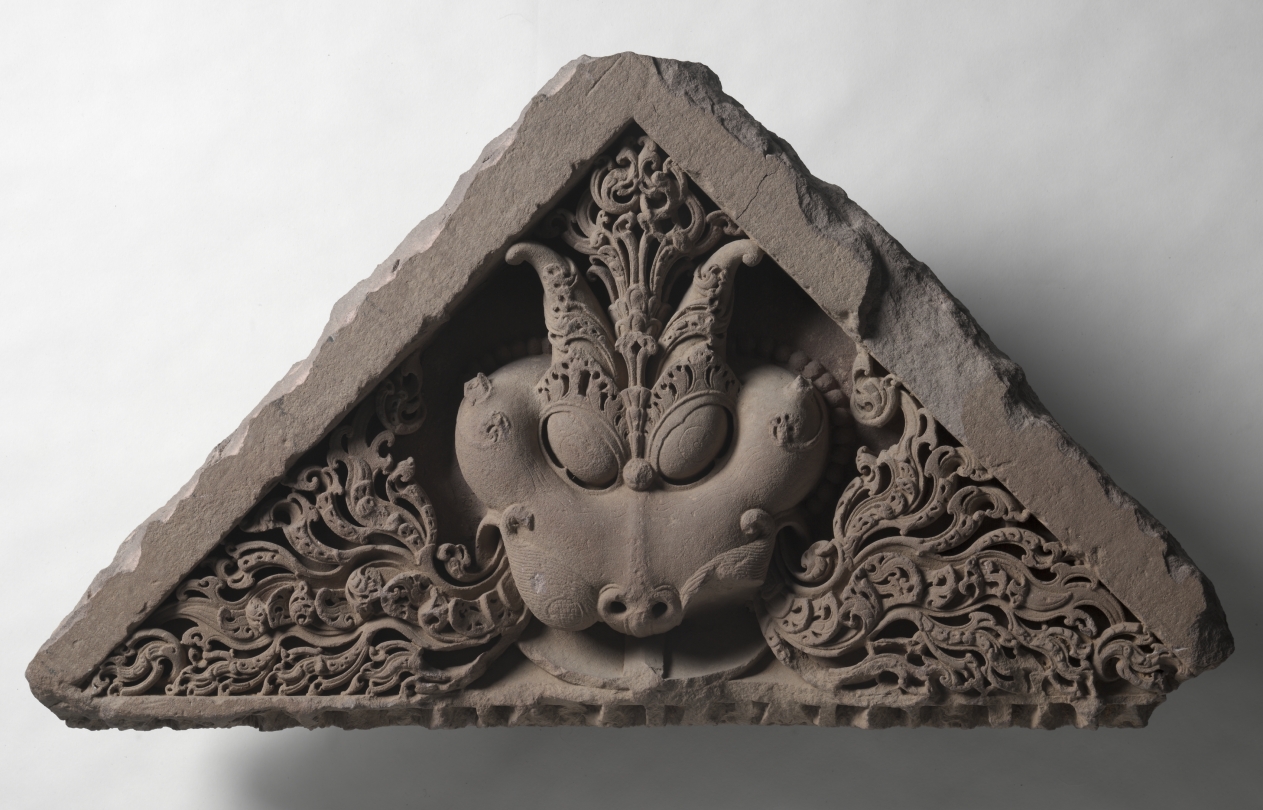
Pediment with the Face of Glory (Kirti-mukha) (c. 1000s) is in the Cleveland Museum of Art collection.
The work and its context
The museum's open-access catalogue describes the work:
Throughout India, sculptures of horned mythic beasts spewing stylized foliage were built into temples, above the entryways, in line with the sanctum. Known as the “face (mukha) of glory (kirti),” the protective mask emanates divine energy from the heart of the temple. The scrolling vegetation flowing from the mouth visually references the unending bounty and success that derives from worship and devotions.
Object facts
- Title: Pediment with the Face of Glory (Kirti-mukha)
- Date: c. 1000s
- Culture: Northern India
- Type: Sculpture
- Technique: sandstone
- Dimensions: Overall: 50.8 x 94 cm (20 x 37 in.)
- Collection: Indian Art
- Department: Indian and Southeast Asian Art
- Accession number: 1988.102
A detail from the museum
Irises and pupils have been lightly incised into the bulging eyes.
Collection credit
The Severance and Greta Millikin Purchase Fund
Further reading listed by the museum
- “The Year in Review for 1988.” The Bulletin of the Cleveland Museum of Art, vol. 76, no. 2, 1989, pp. 30–75.
View the collection record
See the museum's photographs and full catalogue entry. Catalogue text is reproduced from the Cleveland Museum of Art's open-access data, with HTML formatting removed. This object and its supplied image are designated CC0.
Sources
More in Lifestyle
Keep reading