Pendant (1900s): Art, History and Details
Pendant at the Cleveland Museum of Art: 1900s, Gold. Explore the work's context, creator attribution and collection history.
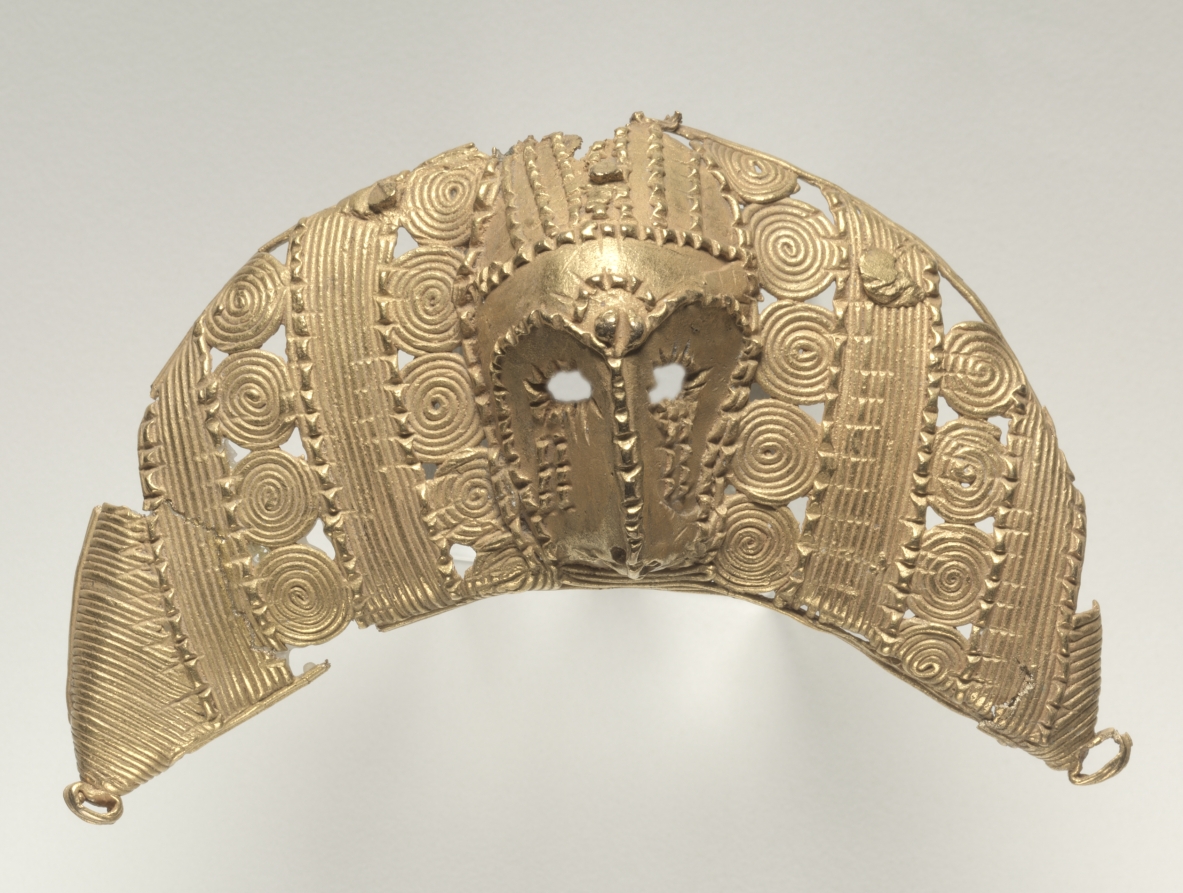
Pendant (1900s) is in the Cleveland Museum of Art collection.
The work and its context
The museum's open-access catalogue describes the work:
Gold objects, always cast using the lost-wax method, are the only Baule art forms associated with ancestor spirits. Usually hidden in pots or suitcases, gold adornments are displayed on important occasions such as funerals. They are laid out around the corpse before burial. A widow will wear them on a chain around her neck or attached to her hair at the ceremony signaling the end of mourning.
Object facts
- Title: Pendant
- Date: 1900s
- Culture: Africa, West Africa, Côte d'Ivoire, probably Baule-style goldsmith
- Type: Jewelry
- Technique: Gold
- Dimensions: Overall: 3.6 x 7.7 cm (1 7/16 x 3 1/16 in.)
- Collection: African Art
- Department: African Art
- Accession number: 1952.85
A detail from the museum
The crescent-shaped scarification on the forehead of this piece is called ngwa, or “moon.”
Collection credit
Purchase from the J. H. Wade Fund
View the collection record
See the museum's photographs and full catalogue entry. Catalogue text is reproduced from the Cleveland Museum of Art's open-access data, with HTML formatting removed. This object and its supplied image are designated CC0.
Sources
More in Lifestyle
Keep reading