Pendant (Hei-tiki) (1800s): Art, History and Details
Pendant (Hei-tiki) at the Cleveland Museum of Art: 1800s, nephrite (greenstone). Explore the work's context, creator attribution and collection history.
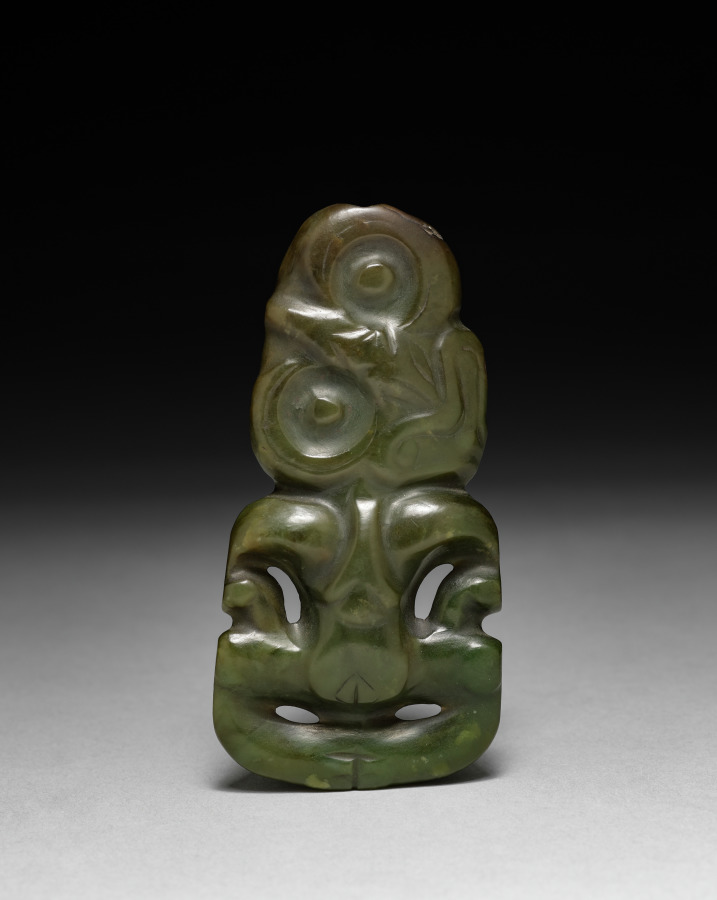
Pendant (Hei-tiki) (1800s) is in the Cleveland Museum of Art collection.
The work and its context
The museum's open-access catalogue describes the work:
Among the Māori, leaders are hereditary and imbued with mana, power and prestige that can be embodied and passed down in the artworks associated with them. Hei-tiki are among these treasured, mana-charged heirlooms, which connect the living to ancestors of the islands’ pre-European past. They may represent Hine-te-Iwaiwa, a legendary ancestress who is the exemplar of Māori womanhood and the patron of childbirth.
Object facts
- Title: Pendant (Hei-tiki)
- Date: 1800s
- Culture: Polynesia, New Zealand, Maori people, 19th century
- Type: Sculpture
- Technique: nephrite (greenstone)
- Dimensions: Overall: 11.2 x 5.5 cm (4 7/16 x 2 3/16 in.)
- Collection: Oceanic Art
- Department: Oceania
- Accession number: 1954.147
A detail from the museum
Hei-tiki may represent Hine-te-Iwaiwa, a legendary ancestress who is the exemplar of Māori womanhood.
Collection credit
John L. Severance Fund
Further reading listed by the museum
- Frost, Natasha. "He Calls the Tie a 'Colonia Noose.' Now Parliament Says It's No Longer Mandatory." The New York Times (February 10, 2021).
View the collection record
See the museum's photographs and full catalogue entry. Catalogue text is reproduced from the Cleveland Museum of Art's open-access data, with HTML formatting removed. This object and its supplied image are designated CC0.
Sources
More in Lifestyle
Keep reading