Pendant (late 1800s–early 1900s): Art, History and Details
Pendant at the Cleveland Museum of Art: late 1800s–early 1900s, Ivory. Explore the work's context, creator attribution and collection history.
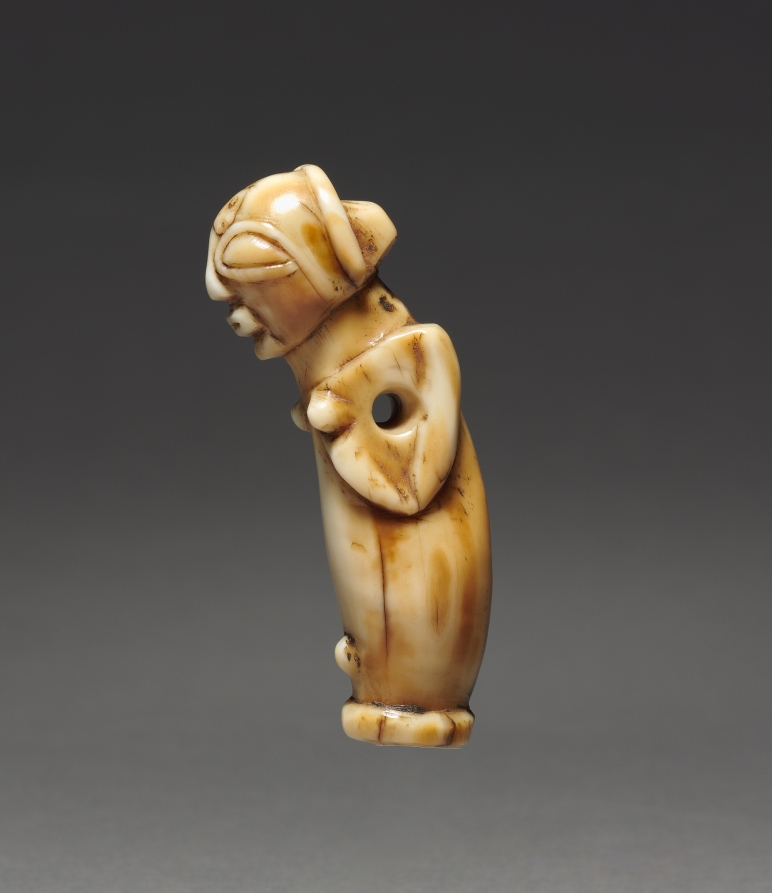
Pendant (late 1800s–early 1900s) is in the Cleveland Museum of Art collection.
The work and its context
The museum's open-access catalogue describes the work:
Luba pendants made in ivory or bone were originally suspended on a cord and worn diagonally across the chest of a high-ranking member of society. Often accompanied by amulets, beads, or small antelope horns, they represented ancestral spirits and served as portals to ancestral wisdom and beneficence. Many of these diminutive figurines hold their hands to their breasts as a sign of the secrets and wisdom they contain.
Object facts
- Title: Pendant
- Date: late 1800s–early 1900s
- Culture: Africa, Central Africa, Democratic Republic of Congo, Luba-style maker
- Type: Jewelry
- Technique: Ivory
- Dimensions: Overall: 8.6 x 2.3 x 4.5 cm (3 3/8 x 7/8 x 1 3/4 in.)
- Collection: African Art
- Department: African Art
- Accession number: 2010.456
A detail from the museum
The caramel-colored patina of the ivory indicates the frequent usage of the pendant.
Collection credit
René and Odette Delenne Collection, Leonard C. Hanna Jr. Fund
Further reading listed by the museum
- Petridis, Constantine, et al. Fragments of the Invisible: The René and Odette Delenne Collection of Congo Sculpture. Cleveland, OH: Cleveland Museum of Art. Milan: 5 Continents Editions, 2013, 84.
View the collection record
See the museum's photographs and full catalogue entry. Catalogue text is reproduced from the Cleveland Museum of Art's open-access data, with HTML formatting removed. This object and its supplied image are designated CC0.
Sources
More in Lifestyle
Keep reading