Pendants (1800s): Art, History and Details
Pendants at the Cleveland Museum of Art: 1800s, Gilt silver with diamonds, emeralds, rubies, pearls, and enamel. Explore the work's context, creator attribution and collection history.
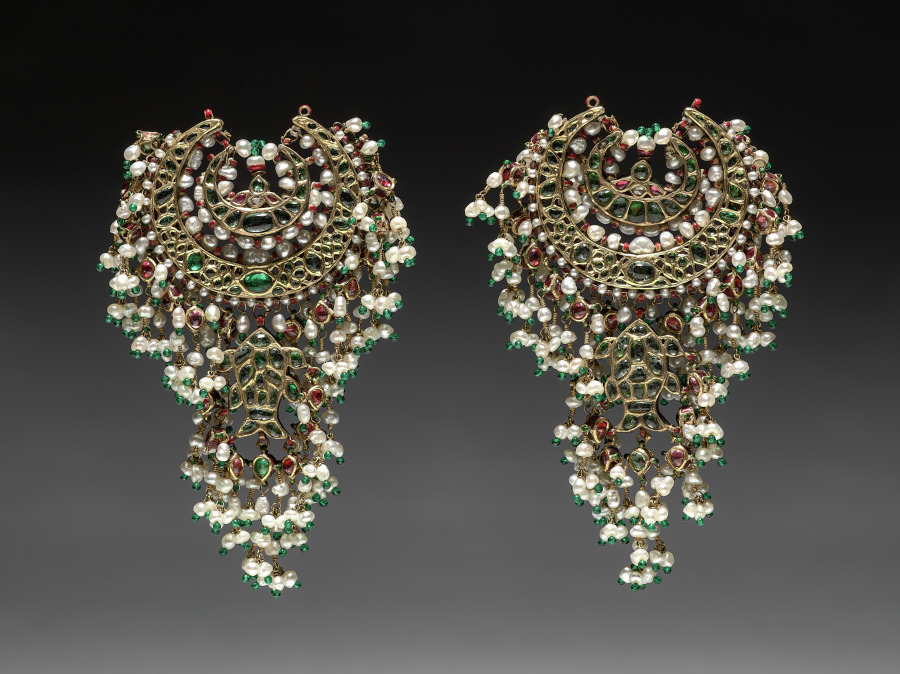
Pendants (1800s) is in the Cleveland Museum of Art collection.
The work and its context
The museum's open-access catalogue describes the work:
Worn either as earrings or pendants from a crown, these double-sided, symmetrical jeweled assemblages each feature a fish as the central ornament. The pair of fish is one of a set of eight auspicious symbols known in Indian art for more than two millennia. As creatures of the waters that are essential for life, they betoken fertility and abundance—attributes of an ideal ruler.
Object facts
- Title: Pendants
- Date: 1800s
- Culture: India, Delhi
- Type: Jewelry
- Technique: Gilt silver with diamonds, emeralds, rubies, pearls, and enamel
- Collection: Indian Art
- Department: Indian and Southeast Asian Art
- Accession number: 1916.280
A detail from the museum
The fish are crystal on one side and emerald on the other.
Collection credit
Gift of Mr. and Mrs. J. H. Wade
View the collection record
See the museum's photographs and full catalogue entry. Catalogue text is reproduced from the Cleveland Museum of Art's open-access data, with HTML formatting removed. This object and its supplied image are designated CC0.
Sources
More in Lifestyle
Keep reading