Pestle (700–1 BCE): Art, History and Details
Pestle at the Cleveland Museum of Art: 700–1 BCE, stone, pigment. Explore the work's context, creator attribution and collection history.
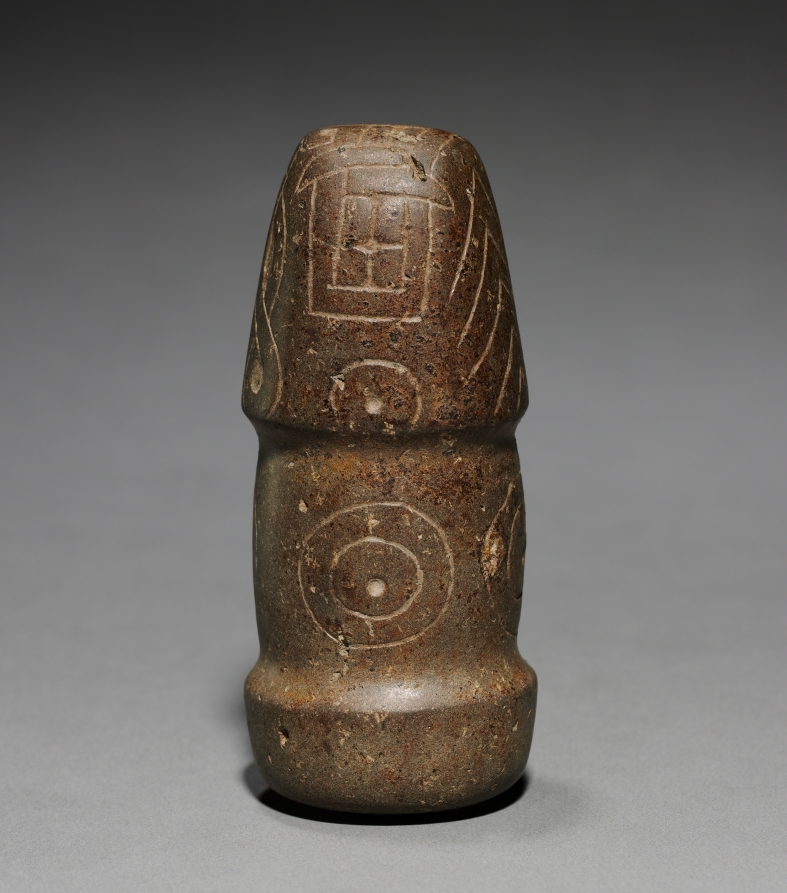
Pestle (700–1 BCE) is in the Cleveland Museum of Art collection.
The work and its context
The museum's open-access catalogue describes the work:
Size suggests that this Chavín-style pestle was not used to grind bulky staples like corn, but instead pigments or plant hallucinogens used in religious rites to achieve spiritual insight and communion with cosmic forces. This may come from Pacopampa, a site in the northern highlands where elites adopted Chavín deities and worshiped them alongside local deities. These small sculptures illustrate the appeal and the spread of Chavín religion.
Object facts
- Title: Pestle
- Date: 700–1 BCE
- Culture: Peru, North Highlands, Pacopampa(?), Chavín style (900-200 BCE)
- Type: Stone
- Technique: stone, pigment
- Dimensions: Overall: 10.8 cm (4 1/4 in.)
- Collection: AA - Andes
- Department: Art of the Americas
- Accession number: 1957.494.b
Collection credit
In memory of Mr. and Mrs. Henry Humphreys, gift of their daughter Helen
Further reading listed by the museum
- Cleveland Museum of Art. The Bulletin of the Cleveland Museum of Art. Cleveland, Ohio: Cleveland Museum of Art, March 1958.
View the collection record
See the museum's photographs and full catalogue entry. Catalogue text is reproduced from the Cleveland Museum of Art's open-access data, with HTML formatting removed. This object and its supplied image are designated CC0.
Sources
More in Lifestyle
Keep reading