Pharmacy Bottle (c. 1500–1510): Art, History and Details
Pharmacy Bottle at the Cleveland Museum of Art: c. 1500–1510, tin-glazed earthenware (maiolica). Explore the work's context, creator attribution and collection history.
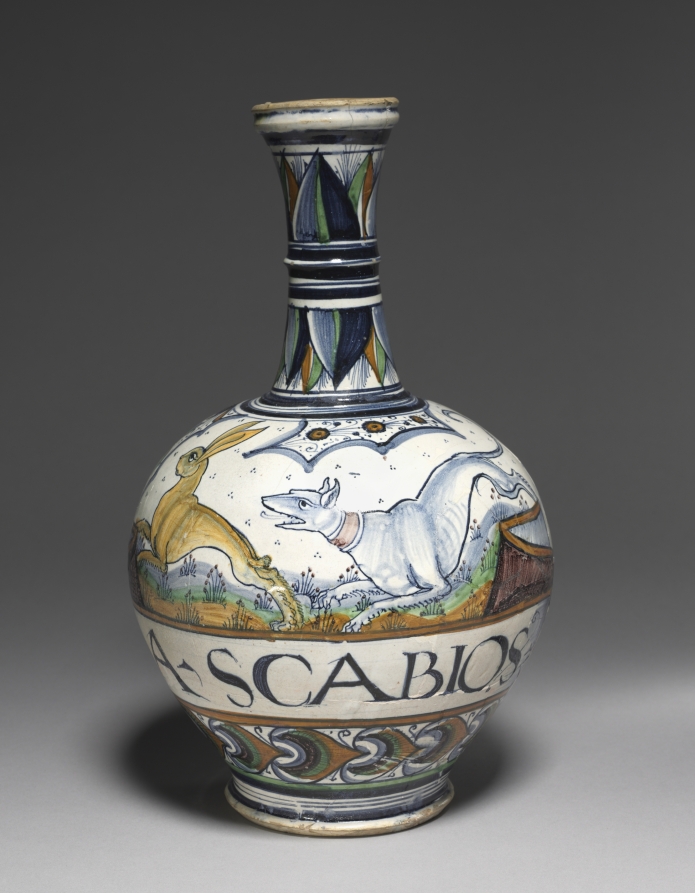
Pharmacy Bottle (c. 1500–1510) is in the Cleveland Museum of Art collection.
The work and its context
The museum's open-access catalogue describes the work:
Pharmacy bottles that lined the shelves of Renaissance pharmacies often held medicinal herbs, spices, and ointments. The inscription on this bottle reads SCABIOS, or “scabious water,” which may refer to a teasel root compound that was used to clean and decontaminate velvet.
Object facts
- Title: Pharmacy Bottle
- Date: c. 1500–1510
- Culture: Italy, Papal States, Faenza
- Type: Ceramic
- Technique: tin-glazed earthenware (maiolica)
- Dimensions: Overall: 38.8 cm (15 1/4 in.)
- Collection: Decorative Arts
- Department: Decorative Art and Design
- Accession number: 1943.52.1
A detail from the museum
During the Renaissance, aristocrats tested the speed and agility of their greyhounds in a sport called "hare coursing."
Collection credit
Purchase from the J. H. Wade Fund
Further reading listed by the museum
- The Cleveland Museum of Art. The Cleveland Museum of Art Handbook. Cleveland: The Cleveland Museum of Art, 1958.
- The Cleveland Museum of Art. Handbook of the Cleveland Museum of Art/1966. Cleveland: The Cleveland Museum of Art, 1966.
- The Cleveland Museum of Art. Handbook of the Cleveland Museum of Art/1969. Cleveland: The Cleveland Museum of Art, 1969.
View the collection record
See the museum's photographs and full catalogue entry. Catalogue text is reproduced from the Cleveland Museum of Art's open-access data, with HTML formatting removed. This object and its supplied image are designated CC0.
Sources
More in Lifestyle
Keep reading