Phiale (Libation Dish) (c. 500–400 BCE): Art, History and Details
Phiale (Libation Dish) at the Cleveland Museum of Art: c. 500–400 BCE, bronze. Explore the work's context, creator attribution and collection history.
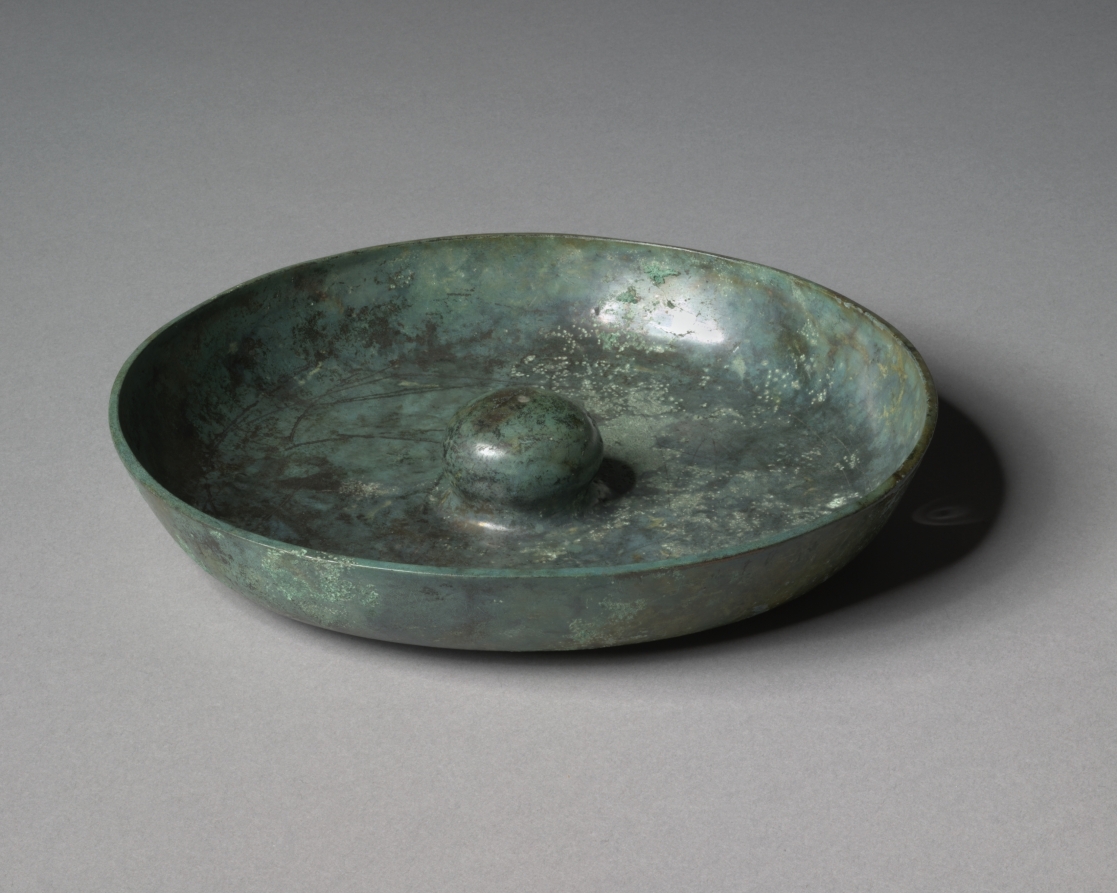
Phiale (Libation Dish) (c. 500–400 BCE) is in the Cleveland Museum of Art collection.
The work and its context
The museum's open-access catalogue describes the work:
This phiale or libation dish takes the form of a shallow bowl with a round protrusion in the center. Dishes of this type were used for many different rituals: when asking for blessings or good fortune, giving thanks, praying for fertility, and when celebrating athletic victories or weddings. Pouring libations for the gods was one of the oldest forms of worship in the ancient world.
Object facts
- Title: Phiale (Libation Dish)
- Date: c. 500–400 BCE
- Culture: Greece
- Type: Metalwork
- Technique: bronze
- Dimensions: Diameter: 17.6 cm (6 15/16 in.)
- Collection: GR - Greek
- Department: Greek and Roman Art
- Accession number: 1980.296
A detail from the museum
The central projection within the phiale is called an omphalos (“navel”).
Collection credit
Gift of Vivian Merrin
Further reading listed by the museum
- Lee, Sherman E. "The Year in Review for 1980." The Bulletin of the Cleveland Museum of Art 68, no. 6 (1981): 163-219.
View the collection record
See the museum's photographs and full catalogue entry. Catalogue text is reproduced from the Cleveland Museum of Art's open-access data, with HTML formatting removed. This object and its supplied image are designated CC0.
Sources
More in Lifestyle
Keep reading