Phurbu (1403–24): Art, History and Details
Phurbu at the Cleveland Museum of Art: 1403–24, metal alloys with gold and silver. Explore the work's context, creator attribution and collection history.
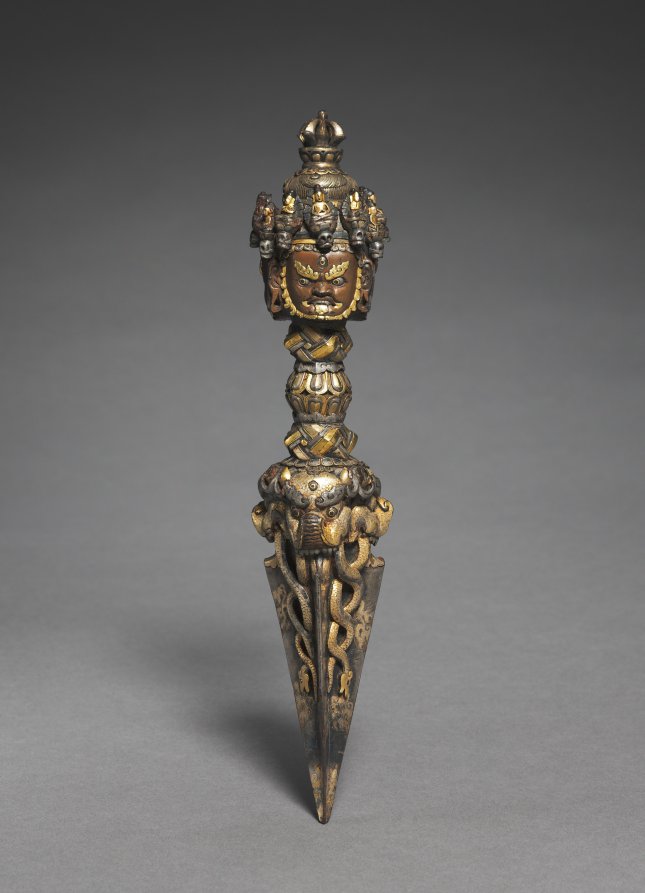
Phurbu (1403–24) is in the Cleveland Museum of Art collection.
The work and its context
The museum's open-access catalogue describes the work:
A purba is a dagger-like stake with three blades that helps tantric practitioners overcome their aversions to substances that are typically considered abhorrent, like pus and blood. Pierced with the purba, the unsavory substances are ritually transformed into wondrous substances, such as nectar. Crowning this purba are a half-vajra and three heads of the tantric enlightened being named Vajrakila, who presides over powers of transformation from wickedness to compassion. Each of his faces has been wrought of a different metal alloy in the imperial workshop of the Chinese emperor of the Ming dynasty. The luxurious quality of the endless knot motifs, the crocodile heads, and the snakes twisting down the center of each blade indicate Chinese imperial workmanship.
Object facts
- Title: Phurbu
- Date: 1403–24
- Culture: Sino-Tibetan, Yongle period (1403–1424)
- Type: Metalwork
- Technique: metal alloys with gold and silver
- Dimensions: Overall: 27 x 6 cm (10 5/8 x 2 3/8 in.)
- Collection: Tibetan Art
- Department: Indian and Southeast Asian Art
- Accession number: 1989.362
Collection credit
Bequest of Mrs. Severance A. Millikin
Further reading listed by the museum
- Huntington, John C., Dina Bangdel, and Robert A. F. Thurman. The Circle of Bliss: Buddhist Meditational Art. Chicago: Serindia Publications, 2003.
View the collection record
See the museum's photographs and full catalogue entry. Catalogue text is reproduced from the Cleveland Museum of Art's open-access data, with HTML formatting removed. This object and its supplied image are designated CC0.
Sources
More in Lifestyle
Keep reading