Phylactery (Reliquary Penant) (c. 500–700): Art, History and Details
Phylactery (Reliquary Penant) at the Cleveland Museum of Art: c. 500–700, copper alloy. Explore the work's context, creator attribution and collection history.
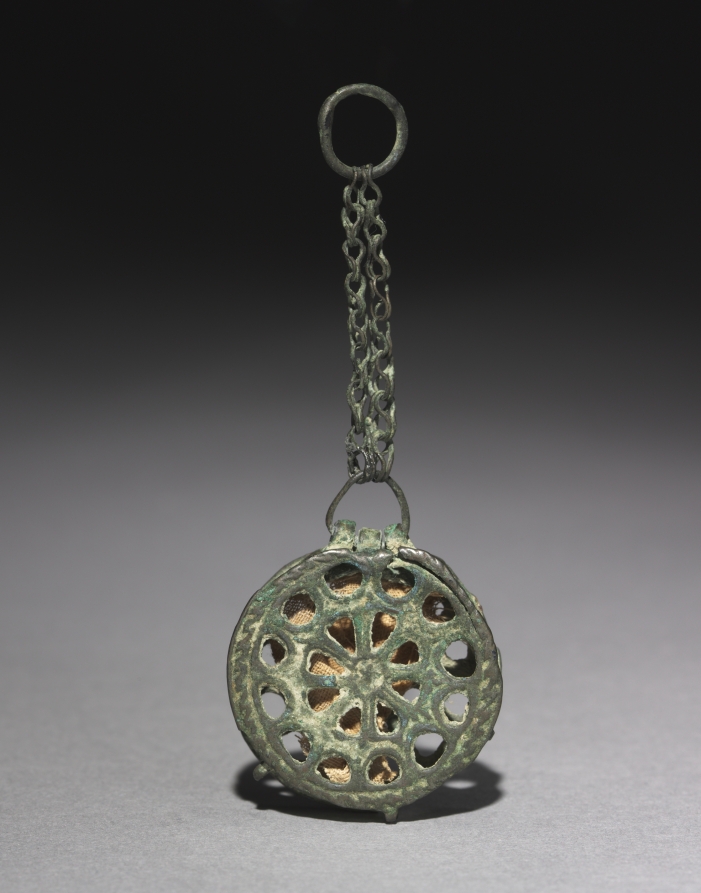
Phylactery (Reliquary Penant) (c. 500–700) is in the Cleveland Museum of Art collection.
The work and its context
The museum's open-access catalogue describes the work:
Made in the 500s, this Byzantine phylactery, or personal reliquary, was meant to be worn around the neck on a chain. It is fashioned of bronze and still contains its original linen-wrapped relic.
Object facts
- Title: Phylactery (Reliquary Penant)
- Date: c. 500–700
- Culture: Byzantium, Egypt or Syria, early Byzantine period, 6th-8th centuries
- Type: Metalwork
- Technique: copper alloy
- Dimensions: Diameter: 3.2 cm (1 1/4 in.); Overall: 7.8 cm (3 1/16 in.)
- Collection: MED - Byzantine
- Department: Medieval Art
- Accession number: 1999.237
A detail from the museum
This was gifted to the museum in memory of Robert P. Bergman, former director of the museum and medievalist.
Collection credit
Gift of Bruce Ferrini in memory of Robert P. Bergman
Further reading listed by the museum
- Cleveland Museum of Art, “Cleveland Museum of Art Acquires Rare Chinese Paintings, Baroque Porcelain Plaque and Other New Acquisitions Exhibited with Hanging Scrolls,” December 20, 1999, Cleveland Museum of Art Archives.
View the collection record
See the museum's photographs and full catalogue entry. Catalogue text is reproduced from the Cleveland Museum of Art's open-access data, with HTML formatting removed. This object and its supplied image are designated CC0.
Sources
More in Lifestyle
Keep reading