Plaque (c. 500–200 BCE): Art, History and Details
Plaque at the Cleveland Museum of Art: c. 500–200 BCE, hammered and cut gold. Explore the work's context, creator attribution and collection history.
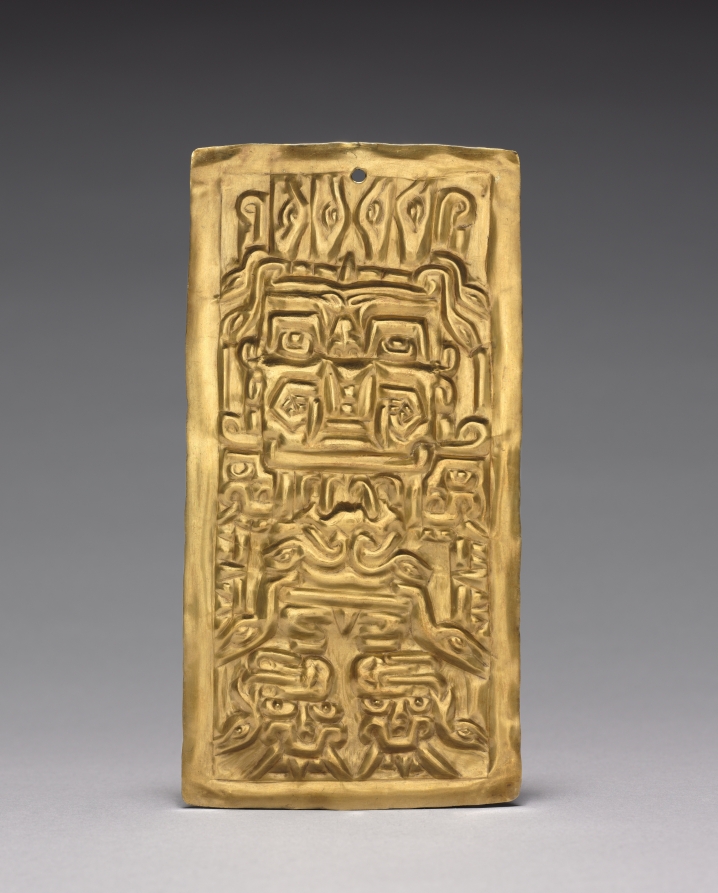
Plaque (c. 500–200 BCE) is in the Cleveland Museum of Art collection.
The work and its context
The museum's open-access catalogue describes the work:
These plaques showing a powerful Chavín deity may come from a group of gold objects found in a lavish tomb in the 1920s. One is shaped as the deity’s fanged head, its fur transformed into sixteen serpents that edge the plaque. On the other, the deity’s visually elusive body also appears: the clawed hands over the chest may clutch a horizontal staff, an emblem of authority; across the waist is a belt that sprouts serpents; and beneath are the legs and feet, which stand atop fanged masks.
Object facts
- Title: Plaque
- Date: c. 500–200 BCE
- Culture: Peru, North Coast, Chongoyape(?), Chavín style (900-200 BCE)
- Type: Metalwork
- Technique: hammered and cut gold
- Dimensions: Overall: 21.8 x 10.8 cm (8 9/16 x 4 1/4 in.)
- Collection: AA - Andes
- Department: Art of the Americas
- Accession number: 1946.117
Collection credit
Purchase from the J. H. Wade Fund
Further reading listed by the museum
- The Cleveland Museum of Art. The Cleveland Museum of Art Handbook. Cleveland, OH: The Cleveland Museum of Art, 1958.
- William Rockhill Nelson Gallery of Art and Mary Atkins Museum of Fine Arts, and Ralph T. Coe. The Imagination of Primitive Man: A Survey of the Arts of the Non-Literate Peoples of the World. Kansas City, Mo: The Museum, 1962.
- The Cleveland Museum of Art. Handbook of the Cleveland Museum of Art/1966. Cleveland, OH: The Cleveland Museum of Art, 1966.
View the collection record
See the museum's photographs and full catalogue entry. Catalogue text is reproduced from the Cleveland Museum of Art's open-access data, with HTML formatting removed. This object and its supplied image are designated CC0.
Sources
More in Lifestyle
Keep reading