Plaque: The Journey to Bethlehem (c. 1100–1120): Art, History and Details
Plaque: The Journey to Bethlehem at the Cleveland Museum of Art: c. 1100–1120, ivory. Explore the work's context, creator attribution and collection history.
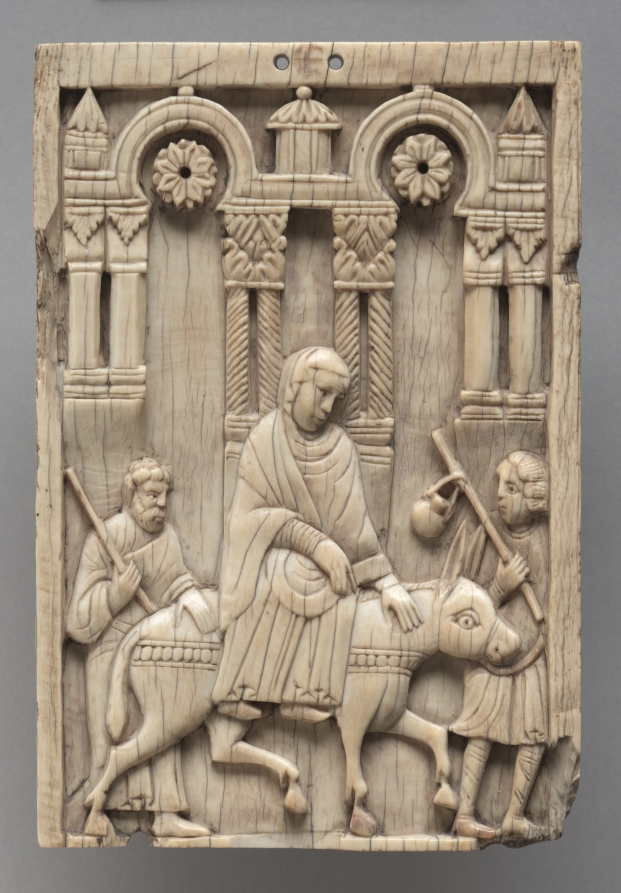
Plaque: The Journey to Bethlehem (c. 1100–1120) is in the Cleveland Museum of Art collection.
The work and its context
The museum's open-access catalogue describes the work:
This ivory plaque depicts Mary, Joseph, and one of his sons from a previous wife on their way to Bethlehem. The scene is set within an architectural frame that combines Byzantine decorative elements (such as the acanthus leaf column capitals) with Islamic architectural motifs (most notably, the distinctively rounded arches). The blending of Byzantine, Islamic, and Western iconographic elements and decorative motifs is typical for the art produced in the city of Amalfi, a prosperous merchant town near Naples in South Italy.
Object facts
- Title: Plaque: The Journey to Bethlehem
- Date: c. 1100–1120
- Culture: South Italy, Amalfi, Romanesque period, 12th century
- Type: Ivory
- Technique: ivory
- Dimensions: Overall: 16.3 x 11 x 1 cm (6 7/16 x 4 5/16 x 3/8 in.)
- Collection: MED - Romanesque
- Department: Medieval Art
- Accession number: 1978.40
Collection credit
Leonard C. Hanna Jr. Fund
Further reading listed by the museum
- Cleveland Museum of Art, “The Cleveland Museum of Art Acquires Six Works from Von Hirsch Collection,” August 1, 1978, Cleveland Museum of Art Archives.
- Lee, Sherman E. “The Year in Review for 1978.” The Bulletin of the Cleveland Museum of Art 66, no. 1 (January 1979): 3–48.
- Wixom, William D. “Eleven Additions to the Medieval Collection.” The Bulletin of the Cleveland Museum of Art 66, no. 3 (March 1979): 86–151.
View the collection record
See the museum's photographs and full catalogue entry. Catalogue text is reproduced from the Cleveland Museum of Art's open-access data, with HTML formatting removed. This object and its supplied image are designated CC0.
Sources
More in Lifestyle
Keep reading