Polyhymnia, Muse of Eloquence (1800): Art, History and Details
Polyhymnia, Muse of Eloquence at the Cleveland Museum of Art: 1800, oil on canvas. Explore the work's context, creator attribution and collection history.
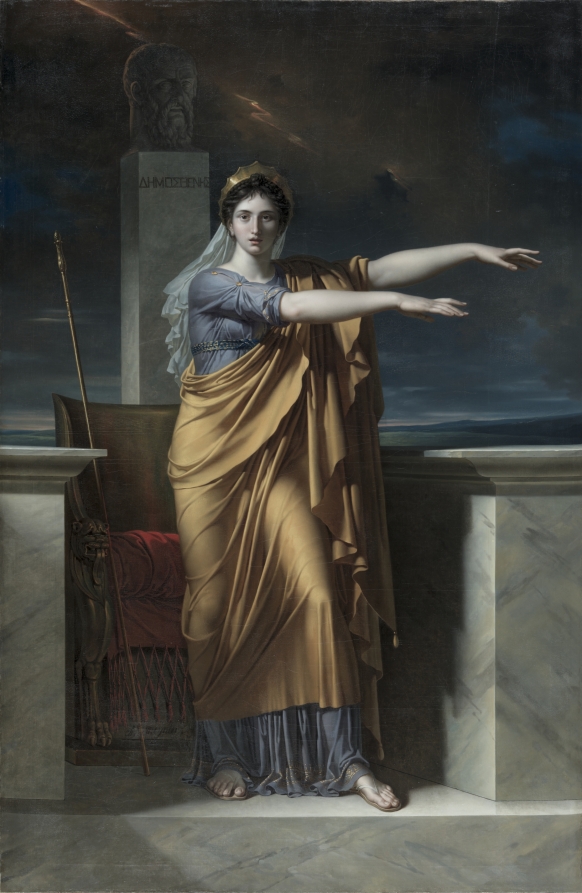
Polyhymnia, Muse of Eloquence (1800) is in the Cleveland Museum of Art collection. The museum's creator attribution is Charles Meynier (French, 1768–1832).
The work and its context
The museum's open-access catalogue describes the work:
Polyhymnia is one of the nine muses in Greek mythology and a patron of dancing or geometry. She is portrayed here standing in front of a bust of the Athenian orator Demosthenes. This painting belongs to a cycle of five works commissioned by businessman François Boyer-Fonfréde for his home in Toulouse.
Object facts
- Title: Polyhymnia, Muse of Eloquence
- Date: 1800
- Creator attribution: Charles Meynier (French, 1768–1832)
- Culture: France, late 18th-early 19th century
- Type: Painting
- Technique: oil on canvas
- Dimensions: Overall: 275 x 177 cm (108 1/4 x 69 11/16 in.)
- Collection: Mod Euro - Painting 1800-1960
- Department: Modern European Painting and Sculpture
- Accession number: 2003.6.1
A detail from the museum
Meynier was trained in a studio known by the students of Jacques-Louis David as the atelier of the "perruques" (wigs), a name given to royalists or conservatives of the period.
Collection credit
Severance and Greta Millikin Purchase Fund
Further reading listed by the museum
- Bellenger, Sylvain. "Magnificent Muses", Cleveland Museum of Art. Cleveland Art: The Cleveland Museum of Art Members Magazine. Vol. 44 no. 01, January 2004
- Bracken Sparks, Amy, "Disappearing Act", Cleveland Museum of Art. Cleveland Art: The Cleveland Museum of Art Members Magazine. Vol. 48 no. 5, May/June 2008
View the collection record
See the museum's photographs and full catalogue entry. Catalogue text is reproduced from the Cleveland Museum of Art's open-access data, with HTML formatting removed. This object and its supplied image are designated CC0.
Sources
More in Lifestyle
Keep reading