Portable Triptych Icon: The Crucifixion (1600s): Art, History and Details
Portable Triptych Icon: The Crucifixion at the Cleveland Museum of Art: 1600s, painted wood panel within enameled brass frame. Explore the work's context, creator attribution and collection history.
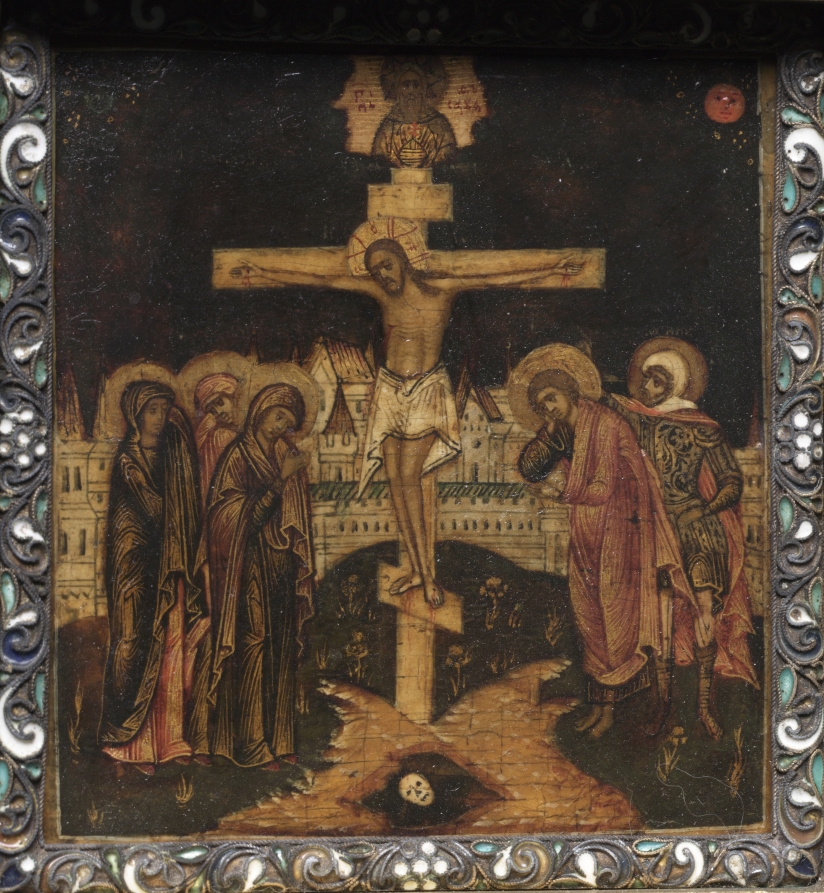
Portable Triptych Icon: The Crucifixion (1600s) is in the Cleveland Museum of Art collection.
The work and its context
The museum's open-access catalogue describes the work:
This triptych icon was probably commissioned by a lay person for private prayer and meditation. It could be folded and shut when not in use. The scenes represented from left to right are: The Crucifixion (left); The Resurrection and Anastasis (center); and Adoration of the Miracle-Working Icon of the Vladimir Mother of God (right). Small portable icons such as this were common to later Russian religious practice.
Object facts
- Title: Portable Triptych Icon: The Crucifixion
- Date: 1600s
- Culture: Byzantium. Russia, Moscow?, Byzantine period, 17th century
- Type: Painting
- Technique: painted wood panel within enameled brass frame
- Dimensions: Unframed: 6.5 x 6.2 x 0.7 cm (2 9/16 x 2 7/16 x 1/4 in.); Closed: 7.3 x 6.9 x 3.4 cm (2 7/8 x 2 11/16 x 1 5/16 in.); Open and extended: 7 x 19.1 cm (2 3/4 x 7 1/2 in.)
- Collection: MED - Byzantine
- Department: Medieval Art
- Accession number: 1961.35.b
Collection credit
Gift of Mrs. Harry F. Stratton
Further reading listed by the museum
- Cleveland Museum of Art. Catalogue of Paintings. Pt. 3. European Paintings of the 16th, 17th, and 18th Centuries. Cleveland: Cleveland Museum of Art, 1974.
View the collection record
See the museum's photographs and full catalogue entry. Catalogue text is reproduced from the Cleveland Museum of Art's open-access data, with HTML formatting removed. This object and its supplied image are designated CC0.
Sources
More in Lifestyle
Keep reading
Related stories