Powder Box (Poudrier) (1779–80): Art, History and Details
Powder Box (Poudrier) at the Cleveland Museum of Art: 1779–80, enamel on gold. Explore the work's context, creator attribution and collection history.
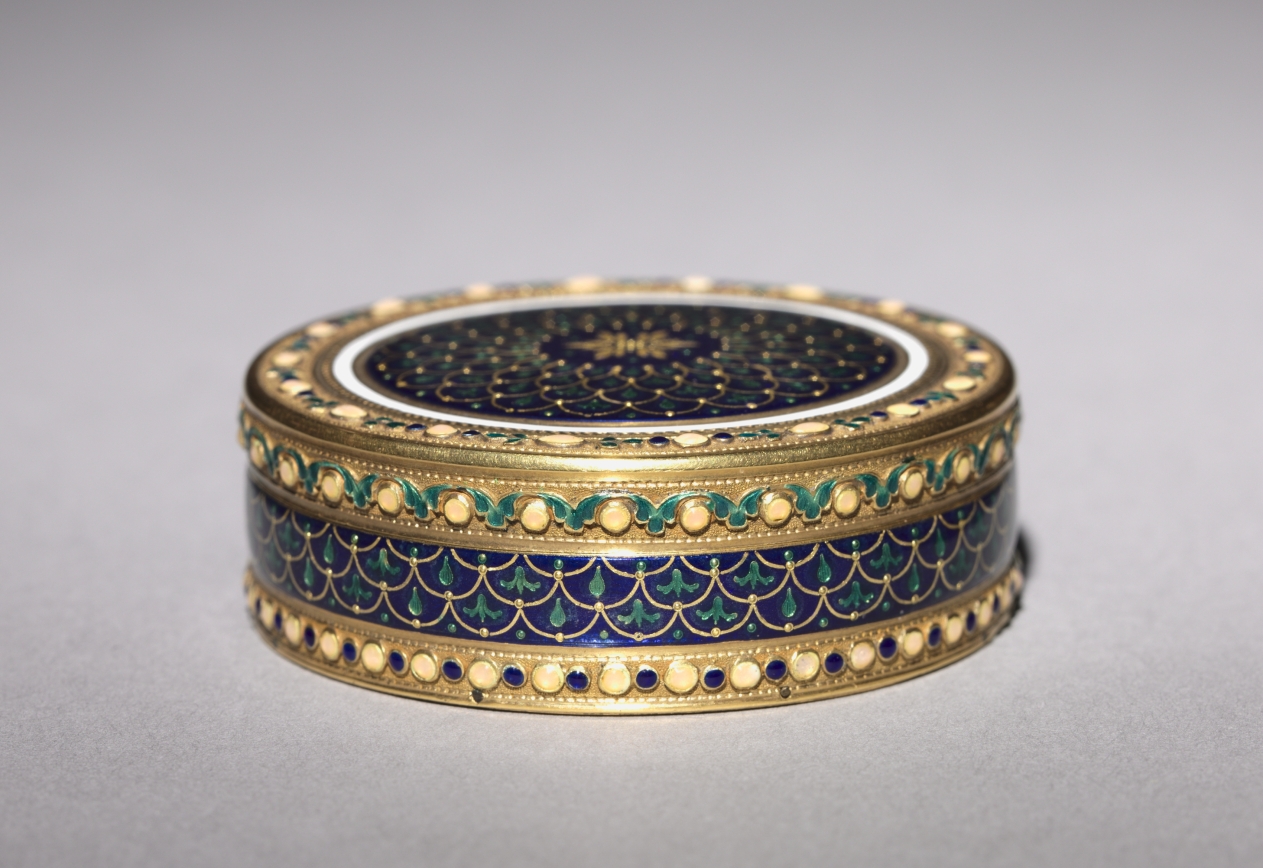
Powder Box (Poudrier) (1779–80) is in the Cleveland Museum of Art collection. The museum's creator attribution is Jean-Joseph Barrière (French).
The work and its context
The museum's open-access catalogue describes the work:
In the 1700s ornately enameled boxes became a popular accessory in the French court. These boxes often held powdered tobacco, called snuff. However, this box, which is unhinged, likely held powder, rouge, or face cream. Pageantry and performance were important aspects of social interaction during this period. The extravagant designs and associated functions of these boxes communicated social and political status.
Object facts
- Title: Powder Box (Poudrier)
- Date: 1779–80
- Creator attribution: Jean-Joseph Barrière (French)
- Culture: France
- Type: Miscellaneous
- Technique: enamel on gold
- Dimensions: Diameter: 1.8 x 5.5 cm (11/16 x 2 3/16 in.)
- Collection: Decorative Arts
- Department: Decorative Art and Design
- Accession number: 1957.403
A detail from the museum
Jean-Joseph Barrière received his designation of master goldsmith in 1763, a coveted title that required candidates to complete a lengthy apprenticeship followed by a test of skill.
Collection credit
Gift of Mrs. Edward B. Greene
View the collection record
See the museum's photographs and full catalogue entry. Catalogue text is reproduced from the Cleveland Museum of Art's open-access data, with HTML formatting removed. This object and its supplied image are designated CC0.
Sources
More in Lifestyle
Keep reading
Related stories