Power figure (nkisi) (late 1800s-early 1900s): Art, History and Details
Power figure (nkisi) at the Cleveland Museum of Art: late 1800s-early 1900s, Wood, organic materials (including resin), and metalized glass. Explore the work's context, creator attribution and collection history.
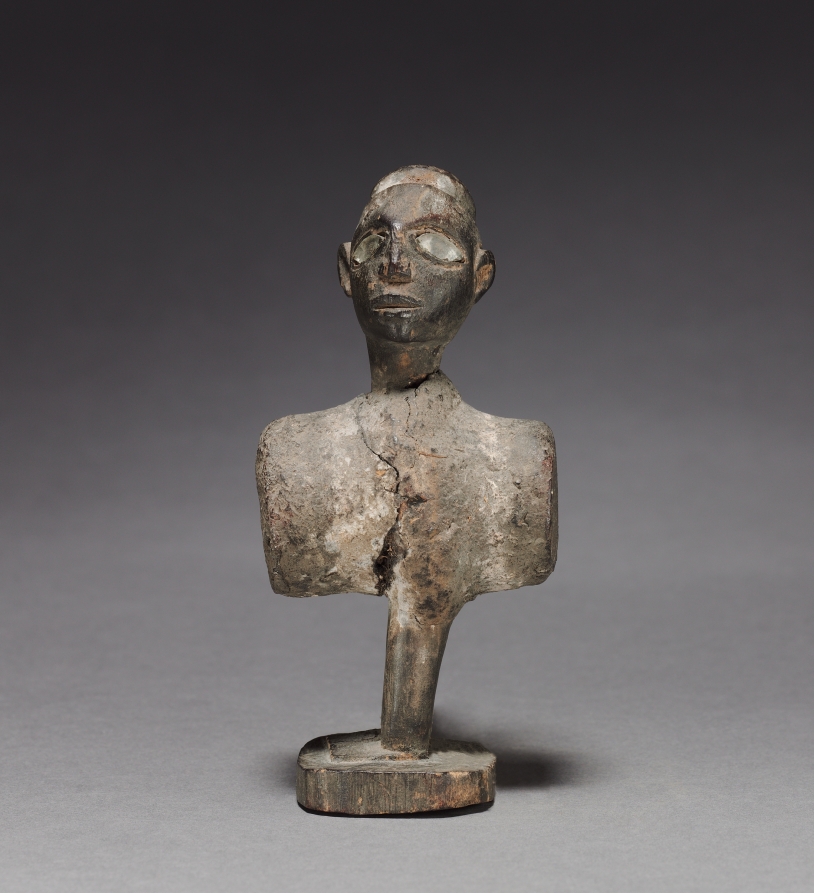
Power figure (nkisi) (late 1800s-early 1900s) is in the Cleveland Museum of Art collection.
The work and its context
The museum's open-access catalogue describes the work:
One of seven anthropomorphic figurines, these minkisi contained medicines in which an ancestral spirit was believed to reside. The medicines served a metaphorical rather than literal purpose in the resolution of conflicts among Kongo people. This figure contained white- and red-colored medicine loads on its belly and back. Its pose may refer to the nkisi’s capacity to see more than others.
Object facts
- Title: Power figure (nkisi)
- Date: late 1800s-early 1900s
- Culture: Africa, Central Africa, Republic of the Congo, Kongo-style maker
- Type: Sculpture
- Technique: Wood, organic materials (including resin), and metalized glass
- Dimensions: Overall: 17 x 7 x 6.5 cm (6 11/16 x 2 3/4 x 2 9/16 in.)
- Collection: African Art
- Department: African Art
- Accession number: 2010.437
A detail from the museum
The nduda minkisi were loaded with gunpowder and/or medicine to protect their owners and to shoot “witches” and other enemies.
Collection credit
René and Odette Delenne Collection, Leonard C. Hanna Jr. Fund
Further reading listed by the museum
- Petridis, Constantine, et al. Fragments of the Invisible: The René and Odette Delenne Collection of Congo Sculpture. Cleveland, OH: Cleveland Museum of Art. Milan: 5 Continents Editions, 2013, 54-58.
View the collection record
See the museum's photographs and full catalogue entry. Catalogue text is reproduced from the Cleveland Museum of Art's open-access data, with HTML formatting removed. This object and its supplied image are designated CC0.
Sources
More in Lifestyle
Keep reading