Power figure (nkisi) (late 1800s–early 1900s): Art, History and Details
Power figure (nkisi) at the Cleveland Museum of Art: late 1800s–early 1900s, Wood, feathers, organic material (including resin), iron, and possibly porcelain. Explore the work's context, creator attribution and collection history.
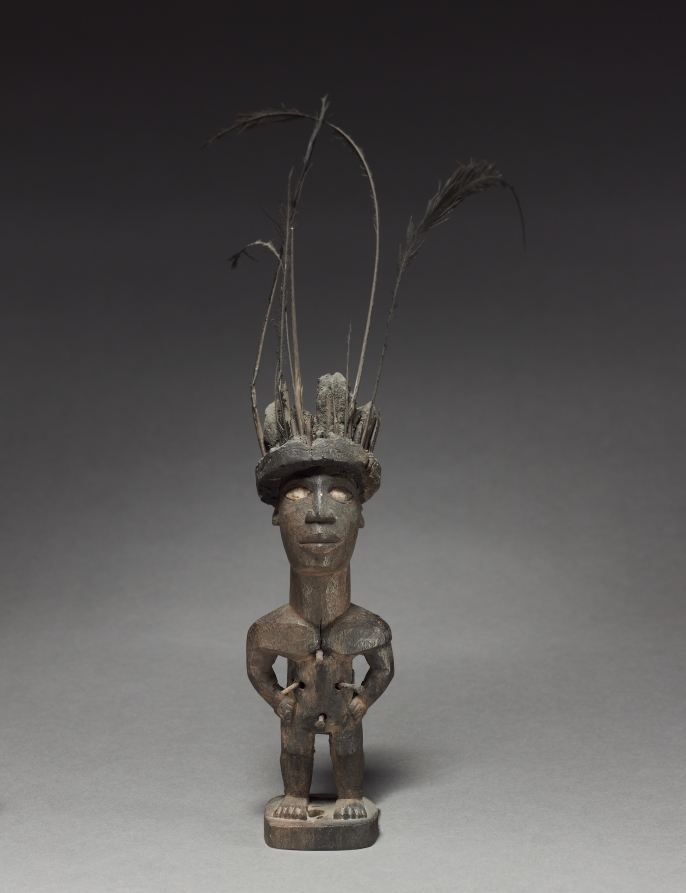
Power figure (nkisi) (late 1800s–early 1900s) is in the Cleveland Museum of Art collection.
The work and its context
The museum's open-access catalogue describes the work:
This figure had lost its nkisi load on the belly, but now shows how the mixture of earth, resin, leaves, glass, and other items was fixed onto the wooden figure, supported by four nails. It had been the property of “the sorcerer of Mboukou.”
Object facts
- Title: Power figure (nkisi)
- Date: late 1800s–early 1900s
- Culture: Africa, Central Africa, Republic of the Congo, Kongo-style maker
- Type: Sculpture
- Technique: Wood, feathers, organic material (including resin), iron, and possibly porcelain
- Dimensions: Overall: 29.5 x 12 x 16 cm (11 5/8 x 4 3/4 x 6 5/16 in.)
- Collection: African Art
- Department: African Art
- Accession number: 2010.440
A detail from the museum
This niksi figurine shows how the mixture of earth, resin, leaves, glass, and other items was fixed. It had been the property of “the sorcerer of Mboukou.”
Collection credit
René and Odette Delenne Collection, Leonard C. Hanna Jr. Fund
Further reading listed by the museum
- Petridis, Constantine, et al. Fragments of the Invisible: The René and Odette Delenne Collection of Congo Sculpture. Cleveland, OH: Cleveland Museum of Art. Milan: 5 Continents Editions, 2013, 23, 54-58.
View the collection record
See the museum's photographs and full catalogue entry. Catalogue text is reproduced from the Cleveland Museum of Art's open-access data, with HTML formatting removed. This object and its supplied image are designated CC0.
Sources
More in Lifestyle
Keep reading