Processional Mask of a Bodhisattva (late 1100s): Art, History and Details
Processional Mask of a Bodhisattva at the Cleveland Museum of Art: late 1100s, wood, lacquered and painted. Explore the work's context, creator attribution and collection history.
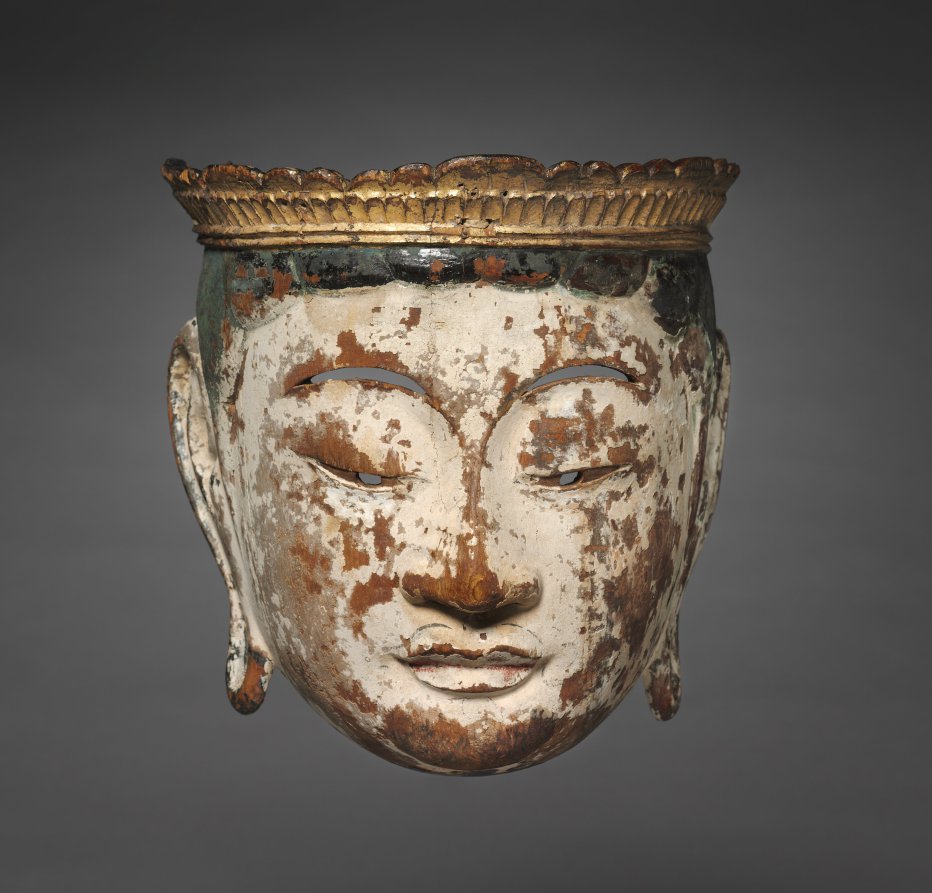
Processional Mask of a Bodhisattva (late 1100s) is in the Cleveland Museum of Art collection.
The work and its context
The museum's open-access catalogue describes the work:
This ceremonial mask was used in a dramatic enactment of the descent of the Buddha Amida and his entourage to welcome the dying to his Pure Land. The mask represents the face of an enlightened being called a bodhisattva. Performances of the welcoming descent had begun by the early 11th century and continue at some temples today.
Object facts
- Title: Processional Mask of a Bodhisattva
- Date: late 1100s
- Culture: Japan, Heian period (794–1185)
- Type: Sculpture
- Technique: wood, lacquered and painted
- Dimensions: Overall: 22 x 16 cm (8 11/16 x 6 5/16 in.)
- Collection: Japanese Art
- Department: Japanese Art
- Accession number: 1950.581
A detail from the museum
The most famous welcoming descent procession happens each year on April 14 at the temple Taimadera in Nara.
Collection credit
John L. Severance Fund
Further reading listed by the museum
- Milliken, William M. “Important Acquisitions of Japanese Art.” The Bulletin of the Cleveland Museum of Art, vol. 38, no. 9 (November 1951), pp. 211–217.
- The Cleveland Museum of Art. The Cleveland Museum of Art Handbook. Cleveland, OH: The Cleveland Museum of Art, 1958.
- The Cleveland Museum of Art. Handbook of the Cleveland Museum of Art/1966. Cleveland, OH: The Cleveland Museum of Art, 1966.
View the collection record
See the museum's photographs and full catalogue entry. Catalogue text is reproduced from the Cleveland Museum of Art's open-access data, with HTML formatting removed. This object and its supplied image are designated CC0.
Sources
More in Lifestyle
Keep reading