Pyxis (400–300 BCE): Art, History and Details
Pyxis at the Cleveland Museum of Art: 400–300 BCE, marble. Explore the work's context, creator attribution and collection history.
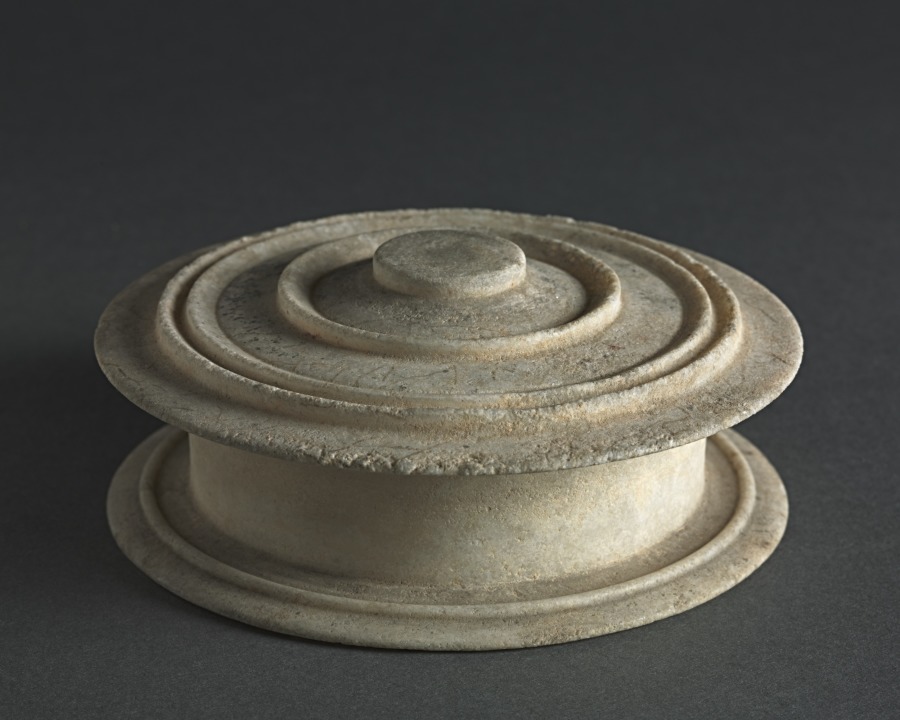
Pyxis (400–300 BCE) is in the Cleveland Museum of Art collection.
The work and its context
The museum's open-access catalogue describes the work:
Pyxides came in a huge variety of sizes, shapes, and materials in the ancient world. Images of pyxides in Greek art often show them being used by women, which has led scholars to believe that they may have been used to hold jewelry or cosmetics. This pyxis is one of few surviving examples made from stone, signifying that it may have had an elite owner.
Object facts
- Title: Pyxis
- Date: 400–300 BCE
- Culture: Greece, Attic
- Type: Stone
- Technique: marble
- Dimensions: Diameter: 7.7 cm (3 1/16 in.); Overall: 4.6 cm (1 13/16 in.); Diameter of lid: 12.2 cm (4 13/16 in.)
- Collection: GR - Greek
- Department: Greek and Roman Art
- Accession number: 1916.759
A detail from the museum
This vessel has a threaded lid, like a modern mason jar, allowing it to be tightly sealed.
Collection credit
Gift of Mr. and Mrs. J. H. Wade
View the collection record
See the museum's photographs and full catalogue entry. Catalogue text is reproduced from the Cleveland Museum of Art's open-access data, with HTML formatting removed. This object and its supplied image are designated CC0.
Sources
More in Lifestyle
Keep reading


