Queen Trishala's Grief and Happiness, Folio 29 (recto), from a Kalpa-sutra (c. 1475–1500): Art, History and Details
Queen Trishala's Grief and Happiness, Folio 29 (recto), from a Kalpa-sutra at the Cleveland Museum of Art: c. 1475–1500, Gum tempera, ink, and gold on paper. Explore the work's context, creator attribution and collection history.
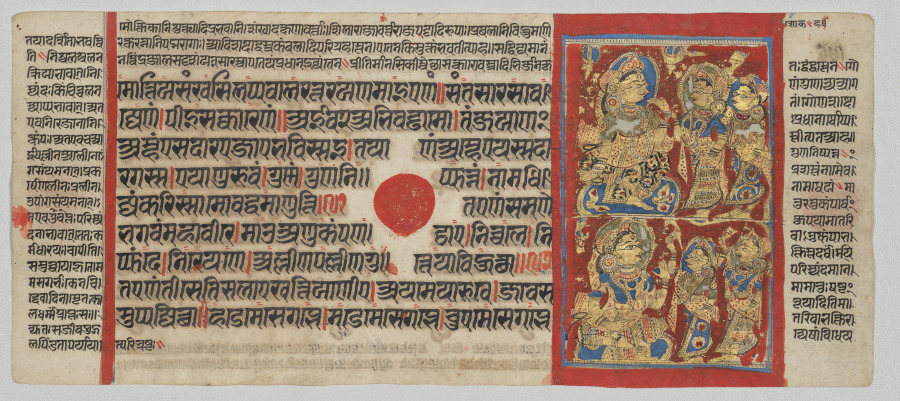
Queen Trishala's Grief and Happiness, Folio 29 (recto), from a Kalpa-sutra (c. 1475–1500) is in the Cleveland Museum of Art collection.
The work and its context
The museum's open-access catalogue describes the work:
This page discusses the pregnancy of Queen Trishala when she was anxious about why she could not feel the baby move. In the painting she addresses her handmaids: “Has the child in my womb been destroyed? Has he been killed? Have I suffered a miscarriage? The child used to move, but now he does not move.” The baby is Mahavira, who will grow to be the historical founder of the Jain religion. According to the text, he remained motionless out of compassion for his mother, not wishing to disturb her. Once he realized how worried she was, he made a little movement, and this filled her with joy.
Object facts
- Title: Queen Trishala's Grief and Happiness, Folio 29 (recto), from a Kalpa-sutra
- Date: c. 1475–1500
- Culture: Western India, Gujarat
- Type: Painting
- Technique: Gum tempera, ink, and gold on paper
- Dimensions: Overall: 12.5 x 25.7 cm (4 15/16 x 10 1/8 in.)
- Collection: Indian Art
- Department: Indian and Southeast Asian Art
- Accession number: 1932.119.29.a
Collection credit
Edward L. Whittemore Fund
View the collection record
See the museum's photographs and full catalogue entry. Catalogue text is reproduced from the Cleveland Museum of Art's open-access data, with HTML formatting removed. This object and its supplied image are designated CC0.
Sources
More in Lifestyle
Keep reading