Raja Hari Sen of Mandi (c. 1650): Art, History and Details
Raja Hari Sen of Mandi at the Cleveland Museum of Art: c. 1650, Gum tempera, ink, and gold on paper. Explore the work's context, creator attribution and collection history.
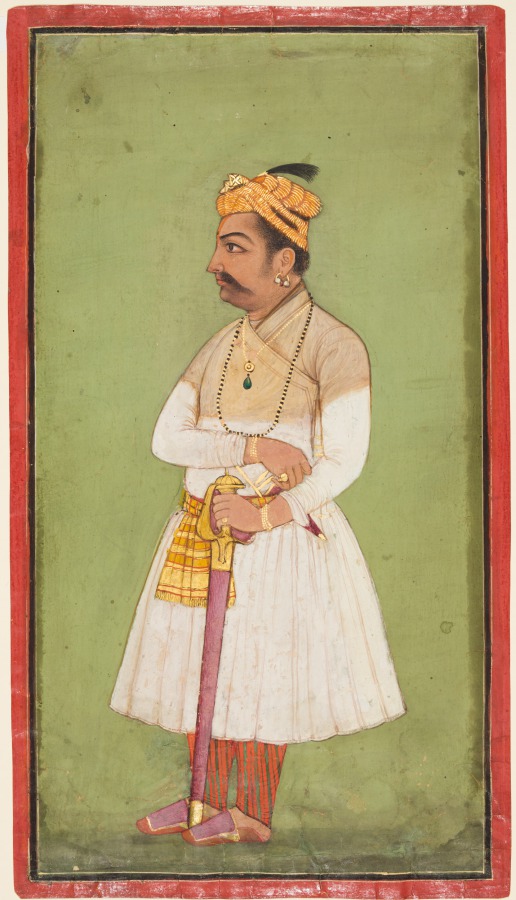
Raja Hari Sen of Mandi (c. 1650) is in the Cleveland Museum of Art collection.
The work and its context
The museum's open-access catalogue describes the work:
In the portrait, the raja is depicted clad in a gheradar jama tied with a short-length pataka, a feature of Jahangir-era fashion. He stands confidently against a monochromatic fern green backdrop, with his left hand supporting his sword in a mauve sheath while his right hand reaches toward his dagger securely tucked in his belt.
Object facts
- Title: Raja Hari Sen of Mandi
- Date: c. 1650
- Culture: Northern India, Pahari kingdoms
- Type: Painting
- Technique: Gum tempera, ink, and gold on paper
- Dimensions: Page: 31.8 x 17.8 cm (12 1/2 x 7 in.); Image: 29.8 x 15.6 cm (11 3/4 x 6 1/8 in.)
- Collection: Indian Art
- Department: Indian and Southeast Asian Art
- Accession number: 2018.96
A detail from the museum
Raja Hari Sen adorns a Jahangir-style turban which was out of imperial fashion at the time of portraiture
Collection credit
Purchase and partial gift from the Catherine and Ralph Benkaim Collection; Severance and Greta Millikin Purchase Fund
Further reading listed by the museum
- Griswold, William, Cameron Kitchin, Chase F. Robinson, Cleveland Museum of Art, Cincinnati Art Museum, and National Museum of Asian Art (Smithsonian Institution). Pahari Paintings: Art and Stories, edited by Sonya Rhie Mace, Sarang Sharma, and Vijay Sharma. Cleveland, Ohio: Cleveland Museum of Art, 2026.
View the collection record
See the museum's photographs and full catalogue entry. Catalogue text is reproduced from the Cleveland Museum of Art's open-access data, with HTML formatting removed. This object and its supplied image are designated CC0.
Sources
More in Lifestyle
Keep reading