Rao Ram Singh I’s Elephant Gone Amok (c. 1700): Art, History and Details
Rao Ram Singh I’s Elephant Gone Amok at the Cleveland Museum of Art: c. 1700, gum tempera, ink, and gold on paper. Explore the work's context, creator attribution and collection history.
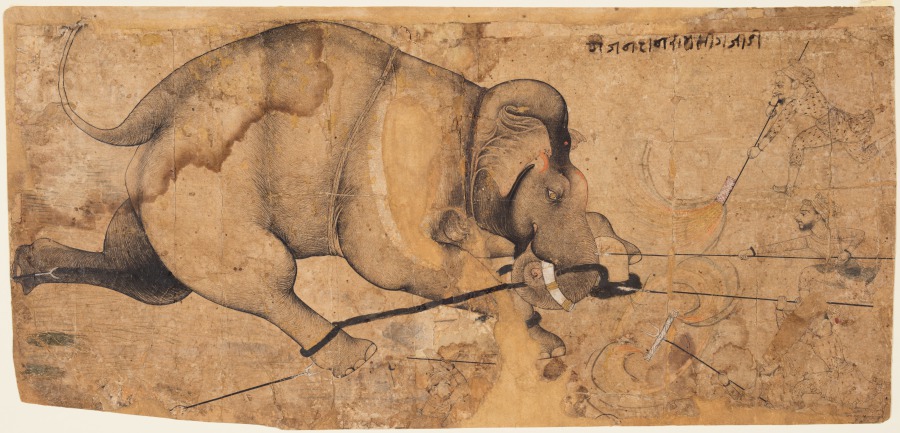
Rao Ram Singh I’s Elephant Gone Amok (c. 1700) is in the Cleveland Museum of Art collection.
The work and its context
The museum's open-access catalogue describes the work:
A royal elephant, named Nahan, according to the inscription, is attempting to free itself by breaking the chain. His ears are flexed forward, and his great mass overwhelms the five men trying to control the elephant with spears and firecrackers tied to sticks. The artist used gold in the elephant’s eye to emphasize the intensity of expression.
Object facts
- Title: Rao Ram Singh I’s Elephant Gone Amok
- Date: c. 1700
- Culture: Northwestern India, Rajasthan, Rajput Kingdom of Kota
- Type: Drawing
- Technique: gum tempera, ink, and gold on paper
- Dimensions: Page: 20 x 41.6 cm (7 7/8 x 16 3/8 in.)
- Collection: Indian Art
- Department: Indian and Southeast Asian Art
- Accession number: 2018.177
A detail from the museum
The tusks are ornamented with gold rings, and the sharp tips have been trimmed.
Collection credit
Purchase and partial gift from the Catherine and Ralph Benkaim Collection; Severance and Greta Millikin Purchase Fund
View the collection record
See the museum's photographs and full catalogue entry. Catalogue text is reproduced from the Cleveland Museum of Art's open-access data, with HTML formatting removed. This object and its supplied image are designated CC0.
Sources
More in Lifestyle
Keep reading