Raven Rattle (late 1800s–early 1900s): Art, History and Details
Raven Rattle at the Cleveland Museum of Art: late 1800s–early 1900s, wood, pigment. Explore the work's context, creator attribution and collection history.
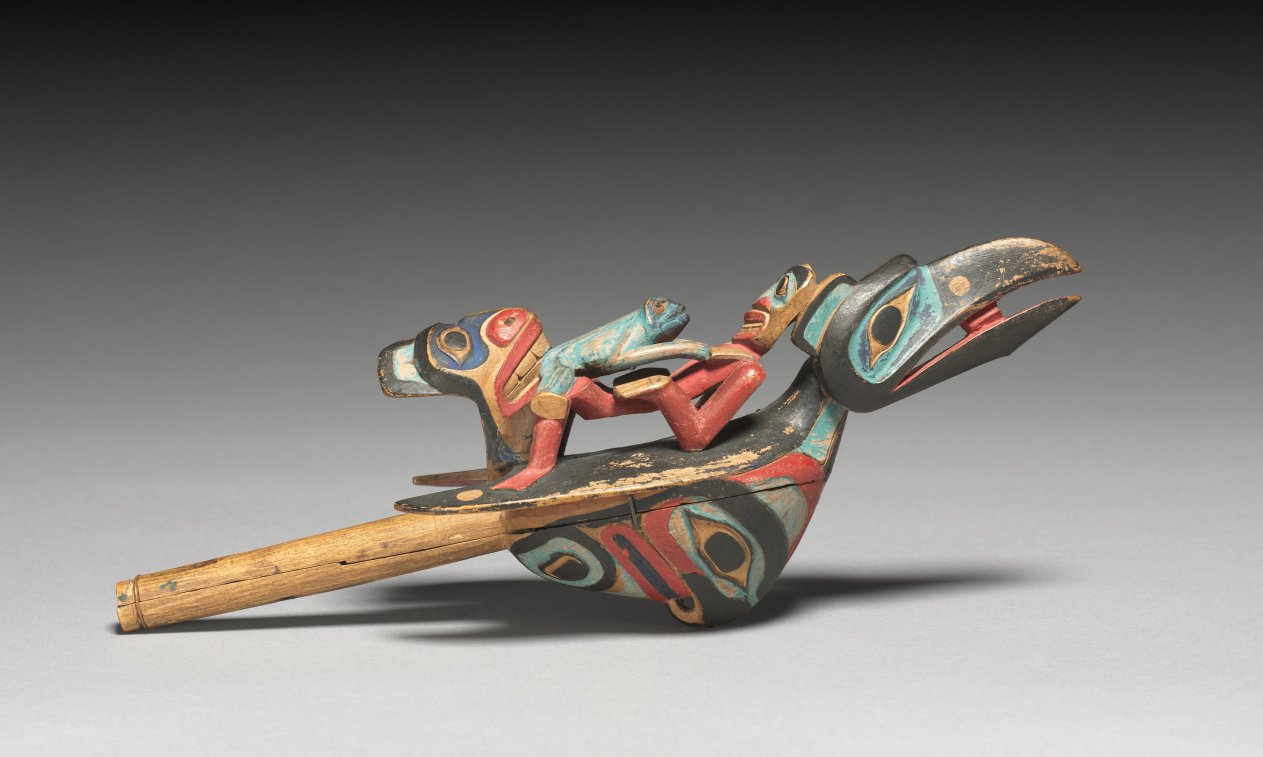
Raven Rattle (late 1800s–early 1900s) is in the Cleveland Museum of Art collection.
The work and its context
The museum's open-access catalogue describes the work:
Rattles featuring ravens with figures on their backs may depict the acts of shamans, whose exceptional abilities allow them to interact with other-than-human beings to control weather, heal illness, or locate animals for the hunt. Such rattles may have started with shamans but secular chiefs often use them during winter ceremonies, implying they are symbols of power.
Object facts
- Title: Raven Rattle
- Date: late 1800s–early 1900s
- Culture: Native North America, Northwest Coast, British Columbia and Alaska, Haida
- Type: Wood
- Technique: wood, pigment
- Dimensions: Overall: 31.8 x 9.3 x 11.2 cm (12 1/2 x 3 11/16 x 4 7/16 in.)
- Collection: AA - Native North America
- Department: Art of the Americas
- Accession number: 1921.1577
Collection credit
Gift of W. A. Price
View the collection record
See the museum's photographs and full catalogue entry. Catalogue text is reproduced from the Cleveland Museum of Art's open-access data, with HTML formatting removed. This object and its supplied image are designated CC0.
Sources
More in Lifestyle
Keep reading