Ring (1700s): Art, History and Details
Ring at the Cleveland Museum of Art: 1700s, Gold, colored glass, rubies, and enamel. Explore the work's context, creator attribution and collection history.
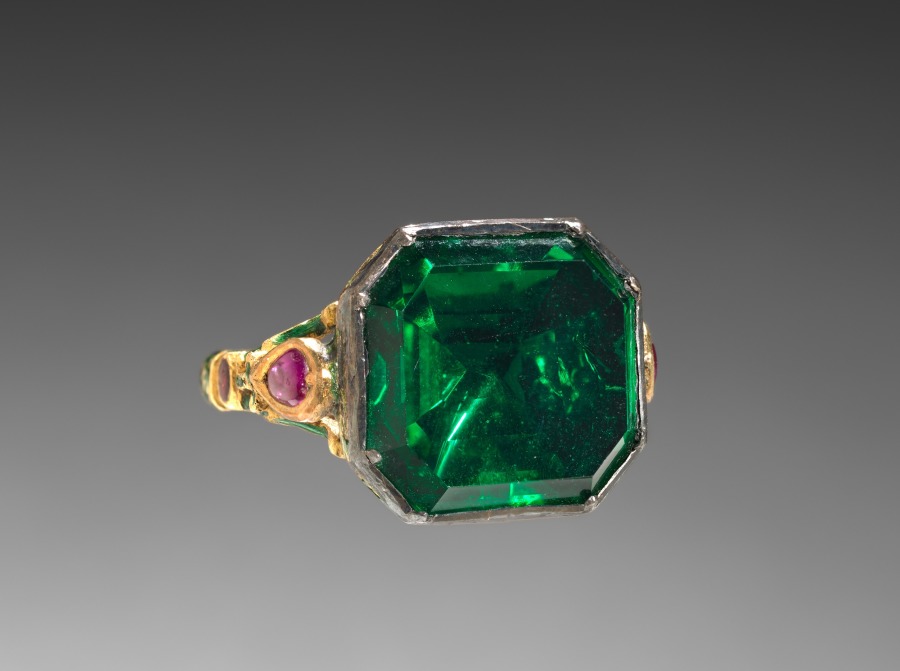
Ring (1700s) is in the Cleveland Museum of Art collection.
The work and its context
The museum's open-access catalogue describes the work:
From the beginning of Emperor Jahangir’s reign in 1605, Mughal court culture became increasingly focused on jewels. Gems were the source of much of the court’s wealth, and the diamond mines of the southern regions of the Deccan provided financial incentives for Mughal conquest of those territories. According to European diplomatic accounts, gems were the preferred gift to the emperor. Rubies, like those set into this ring, were imported from Myanmar and Central Asia and were the preferred gems of Mughal royalty, alongside emeralds.
Object facts
- Title: Ring
- Date: 1700s
- Culture: India, Mughal Dynasty (1526–1756)
- Type: Jewelry
- Technique: Gold, colored glass, rubies, and enamel
- Dimensions: Diameter: 2.6 cm (1 in.)
- Collection: Indian Art
- Department: Indian and Southeast Asian Art
- Accession number: 1944.67
Collection credit
Edward L. Whittemore Fund
View the collection record
See the museum's photographs and full catalogue entry. Catalogue text is reproduced from the Cleveland Museum of Art's open-access data, with HTML formatting removed. This object and its supplied image are designated CC0.
Sources
More in Lifestyle
Keep reading