Ring Money (c. 100–50 BCE): Art, History and Details
Ring Money at the Cleveland Museum of Art: c. 100–50 BCE, gold. Explore the work's context, creator attribution and collection history.
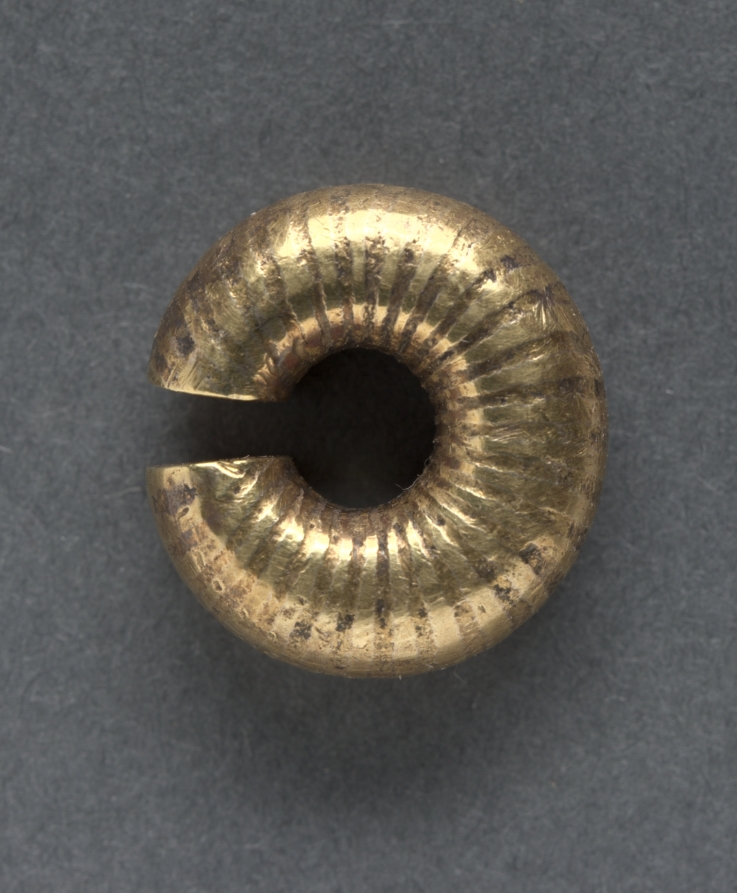
Ring Money (c. 100–50 BCE) is in the Cleveland Museum of Art collection.
The work and its context
The museum's open-access catalogue describes the work:
Used in the ancient world from c. 1600 BC, gold ring money was also in general use in Ireland around 100-50 BC. It was used in Britain as well but not to the same extent. This piece was found at Norman Leighton, Warwickshire, almost the central county of England. As a means of exchange, gold was scarce in Britain until successive waves of invaders from the mainland, fleeing the expanding power of the Romans, brought with them degraded staters, an ancient gold coin of the Greeks.
Object facts
- Title: Ring Money
- Date: c. 100–50 BCE
- Culture: England
- Type: Coins
- Technique: gold
- Dimensions: Diameter: 1.8 cm (11/16 in.)
- Collection: MED - Numismatics
- Department: Medieval Art
- Accession number: 1969.142
A detail from the museum
Ring money could be strung, allowing you to wear your wealth and easily carry it with you.
Collection credit
The Norweb Collection
Further reading listed by the museum
- Cleveland Museum of Art, and Emery May Norweb. English Gold Coins, Ancient to Modern Times, On Loan to the Cleveland Museum of Art from the Norweb Collection. 1968.
View the collection record
See the museum's photographs and full catalogue entry. Catalogue text is reproduced from the Cleveland Museum of Art's open-access data, with HTML formatting removed. This object and its supplied image are designated CC0.
Sources
More in Lifestyle
Keep reading