Ritual Axe (c. 1407–1410): Art, History and Details
Ritual Axe at the Cleveland Museum of Art: c. 1407–1410, iron alloy with gold and silver inlay. Explore the work's context, creator attribution and collection history.
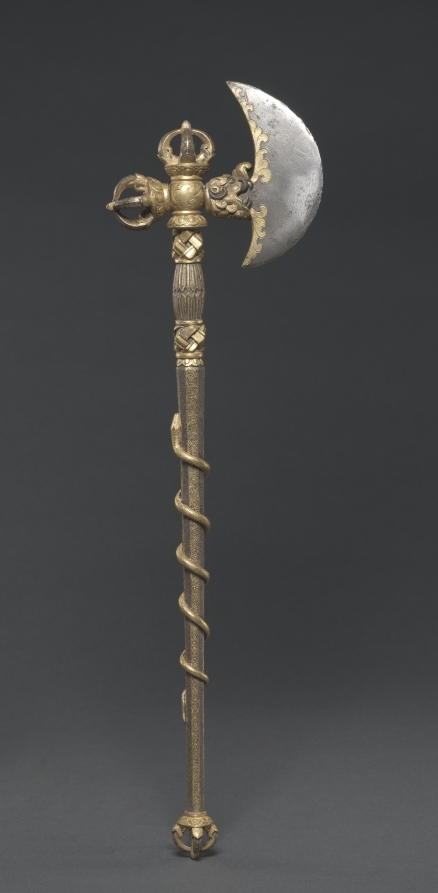
Ritual Axe (c. 1407–1410) is in the Cleveland Museum of Art collection.
The work and its context
The museum's open-access catalogue describes the work:
Ceremonial weaponry was used in tantric rituals to combat obstacles to enlightenment, such as ignorance, delusions, and selfishness. In 1407, a high-ranking Tibetan monastic patriarch visited the emperor of the Ming dynasty, known as Yongle. The Yongle emperor presented him with a number of gifts, of which this ritual axe was probably a component, since the axe bears his identifying inscription in a cartouche. Imperial Chinese workmanship is noted in the lush rendering of the lion heads from which the blades emerge, the calligraphic serpentine forms, and the cloud motifs.
Object facts
- Title: Ritual Axe
- Date: c. 1407–1410
- Culture: Sino-Tibetan, Derge School, Yongle period (1403-1427)
- Type: Metalwork
- Technique: iron alloy with gold and silver inlay
- Dimensions: Overall: 40.4 cm (15 7/8 in.)
- Collection: Tibetan Art
- Department: Indian and Southeast Asian Art
- Accession number: 1978.9.1
Collection credit
John L. Severance Fund
Further reading listed by the museum
- Huntington, John C., Dina Bangdel, and Robert A. F. Thurman. The Circle of Bliss: Buddhist Meditational Art. Chicago: Serindia Publications, 2003.
View the collection record
See the museum's photographs and full catalogue entry. Catalogue text is reproduced from the Cleveland Museum of Art's open-access data, with HTML formatting removed. This object and its supplied image are designated CC0.
Sources
More in Lifestyle
Keep reading