Royal Elephant Ramkali with a Mahout (c. 1761): Art, History and Details
Royal Elephant Ramkali with a Mahout at the Cleveland Museum of Art: c. 1761, gum tempera, ink, and gold on paper. Explore the work's context, creator attribution and collection history.
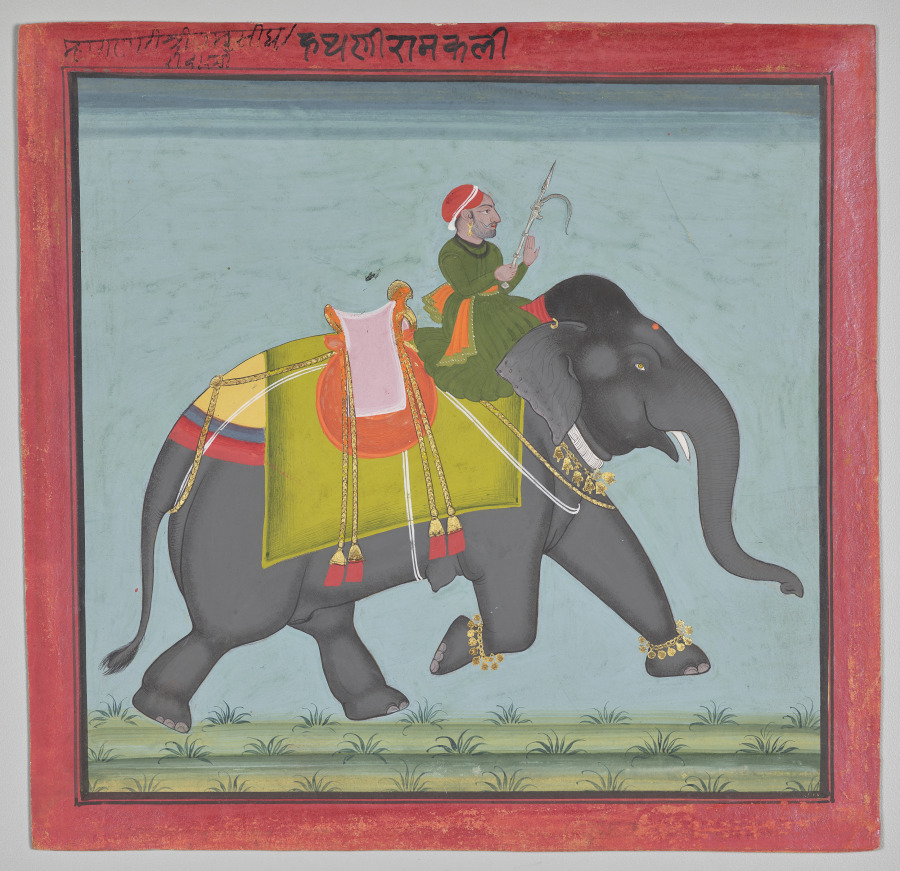
Royal Elephant Ramkali with a Mahout (c. 1761) is in the Cleveland Museum of Art collection.
The work and its context
The museum's open-access catalogue describes the work:
The mahout (elephant driver), directs the confident female elephant at a brisk trot, with bells swinging in response to her movements. This painting belongs to a series depicting the elephants in the royal stables at Udaipur, each one named in the upper margin. Elephants have been a potent emblem for royalty in India for more than three thousand years.
Object facts
- Title: Royal Elephant Ramkali with a Mahout
- Date: c. 1761
- Culture: Northwestern India, Rajasthan, Rajput kingdom of Mewar, Udaipur, Court of Ari Singh (reigned 1761-73)
- Type: Painting
- Technique: gum tempera, ink, and gold on paper
- Dimensions: Painting: 20.6 x 21.4 cm (8 1/8 x 8 7/16 in.); Overall: 24.1 x 25 cm (9 1/2 x 9 13/16 in.)
- Collection: Indian Art
- Department: Indian and Southeast Asian Art
- Accession number: 2005.202
A detail from the museum
The name Ramkali is a popular nickname for young girls in some parts of northern India.
Collection credit
Gift of Dr. Norman Zaworski
View the collection record
See the museum's photographs and full catalogue entry. Catalogue text is reproduced from the Cleveland Museum of Art's open-access data, with HTML formatting removed. This object and its supplied image are designated CC0.
Sources
More in Lifestyle
Keep reading