Saint Martin of Tours (c. 1480–1500): Art, History and Details
Saint Martin of Tours at the Cleveland Museum of Art: c. 1480–1500, polychromed walnut. Explore the work's context, creator attribution and collection history.
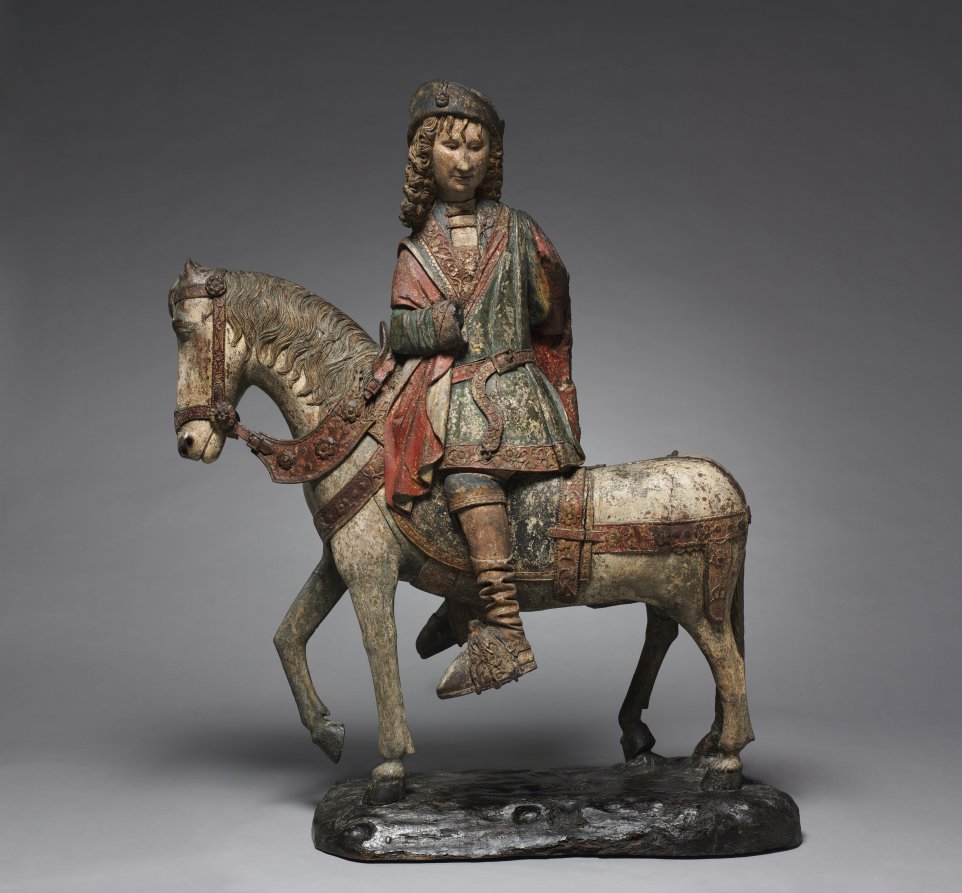
Saint Martin of Tours (c. 1480–1500) is in the Cleveland Museum of Art collection.
The work and its context
The museum's open-access catalogue describes the work:
According to tradition, Saint Martin was born during the reign of Constantine the Great (306–37 CE) and served as a member of the Roman cavalry in Gaul. There he earned a reputation for humility and boundless charity. During the severe winter of 322 CE at Amiens, Martin's compassion for others led him to divide his cloak with his sword, and to give half to a poor, naked beggar. This event, along with Martin's subsequent vision of the beggar as Christ, eventually led to the saint's widespread popularity throughout medieval Europe. Saint Martin was particularly venerated in the city of Tours where he served as bishop, where his tomb is located, and of which he remains the patron saint.
Object facts
- Title: Saint Martin of Tours
- Date: c. 1480–1500
- Culture: Northeast France or Flanders, 15th century
- Type: Sculpture
- Technique: polychromed walnut
- Dimensions: Overall: 124.5 x 105.1 x 41.9 cm (49 x 41 3/8 x 16 1/2 in.)
- Collection: MED - Gothic
- Department: Medieval Art
- Accession number: 1915.563
Collection credit
Gift of the John Huntington Art and Polytechnic Trust
Further reading listed by the museum
- W. M. M. "Gothic Art." The Bulletin of the Cleveland Museum of Art 6, no. 4 (1919): 67-70.
View the collection record
See the museum's photographs and full catalogue entry. Catalogue text is reproduced from the Cleveland Museum of Art's open-access data, with HTML formatting removed. This object and its supplied image are designated CC0.
Sources
More in Lifestyle
Keep reading