Saluting Protective Spirit (883–859 BCE): Art, History and Details
Saluting Protective Spirit at the Cleveland Museum of Art: 883–859 BCE, gypsum. Explore the work's context, creator attribution and collection history.
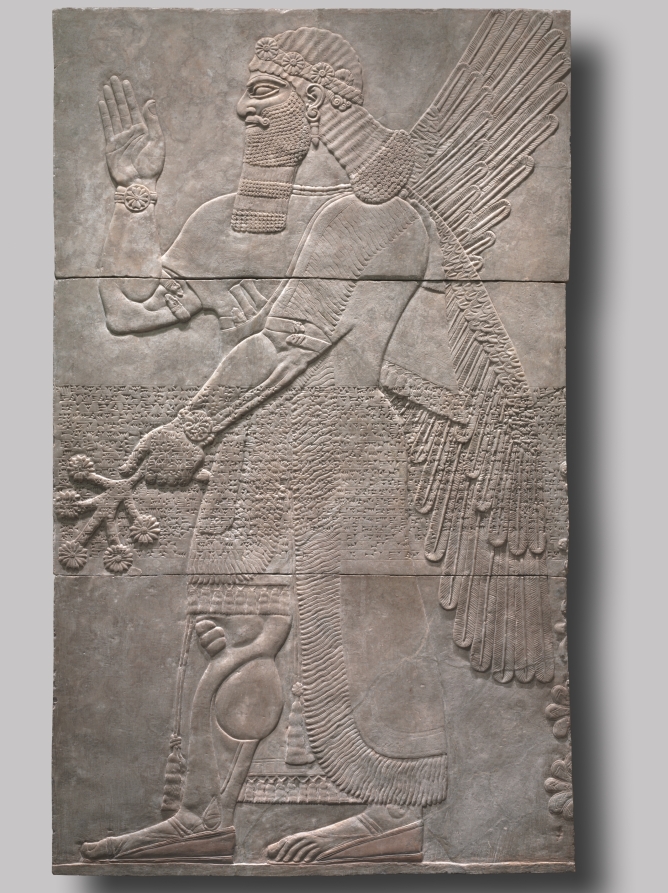
Saluting Protective Spirit (883–859 BCE) is in the Cleveland Museum of Art collection.
The work and its context
The museum's open-access catalogue describes the work:
Striding forward with muscular arms and legs, this winged deity offers a gesture of salutation along with symbols of agricultural bounty. Inscribed with an account of the Assyrian king Ashurnasirpal II's military conquests and victories, this relief once stood alongside hundreds of similar ones that decorated the palace at Nimrud.
Object facts
- Title: Saluting Protective Spirit
- Date: 883–859 BCE
- Culture: Neo-Assyrian (911–609 BCE), Iraq, Nimrud, Northwest Palace, reign of Ashurnasirpal II (883–859 BCE)
- Type: Sculpture
- Technique: gypsum
- Dimensions: Overall: 229.9 x 137 cm (90 1/2 x 53 15/16 in.)
- Collection: Near Eastern Art
- Department: Egyptian and Ancient Near Eastern Art
- Accession number: 1943.246
A detail from the museum
The details of his garments are painstakingly rendered; he wears a long fringed cloak with tassels over a shorter kilt and an under tunic.
Collection credit
Purchase from the J. H. Wade Fund
Further reading listed by the museum
- Cuneiform Digital Library Initiative (CDLI), no. P427317: Nimrud NW Palace Relief Slab S-06.
- Englund, Klaudia."Room S", The Northwest Palace at Nimrud. Cuneiform Digital Library Initiative (CDLI).
- Layard, Austen Henry. The Monuments of Nineveh: From Drawings Made on the Spot. London: J. Murray, 1849.
View the collection record
See the museum's photographs and full catalogue entry. Catalogue text is reproduced from the Cleveland Museum of Art's open-access data, with HTML formatting removed. This object and its supplied image are designated CC0.
Sources
More in Lifestyle
Keep reading