Sarong (early 1900s): Art, History and Details
Sarong at the Cleveland Museum of Art: early 1900s, batik; cotton. Explore the work's context, creator attribution and collection history.
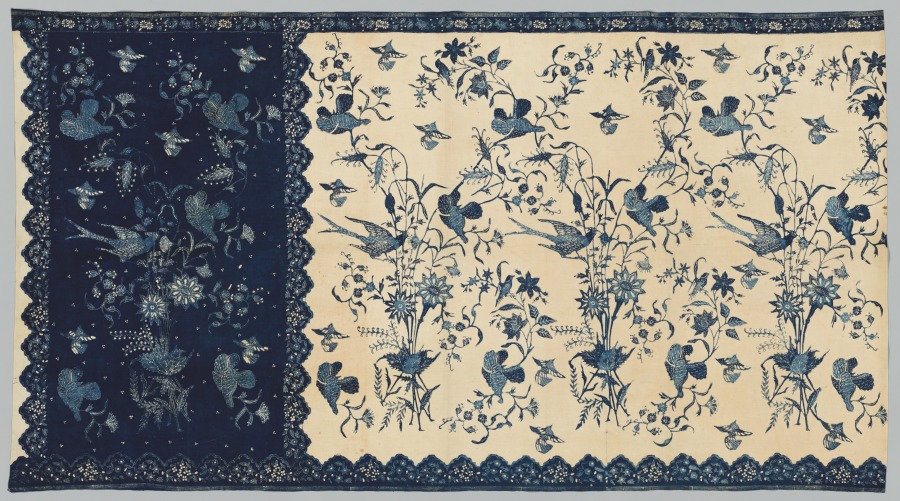
Sarong (early 1900s) is in the Cleveland Museum of Art collection.
The work and its context
The museum's open-access catalogue describes the work:
Batiks made along the northern coast of Java were influenced not only by Chinese motifs and designs but also European, as a result of the Dutch presence in Indonesia from the sixteenth to the twentieth centuries. In this sarong, European influence is clearly evident in the sprays of flowers and types of birds represented. Batiks dyed only in indigo were a specialty of Indramaju. Shading and contrast are skillfully achieved through different intensities of blue, through the character and thickness of line, and by the use of tiny dots.
Object facts
- Title: Sarong
- Date: early 1900s
- Culture: Indonesia, Java, North Coast, Indramaju ?, early 20th century
- Type: Textile
- Technique: batik; cotton
- Dimensions: Overall: 196.9 x 106.7 cm (77 1/2 x 42 in.)
- Collection: Textiles
- Department: Textiles
- Accession number: 1917.27
Collection credit
Gift of Mrs. James J. Tracy
View the collection record
See the museum's photographs and full catalogue entry. Catalogue text is reproduced from the Cleveland Museum of Art's open-access data, with HTML formatting removed. This object and its supplied image are designated CC0.
Sources
More in Lifestyle
Keep reading