Sash for a Firefighter's Suit (Kaji shōzoku) (late 1700s): Art, History and Details
Sash for a Firefighter's Suit (Kaji shōzoku) at the Cleveland Museum of Art: late 1700s, Wool (rasha); applique and silk and gold thread cord. Explore the work's context, creator attribution and collection history.
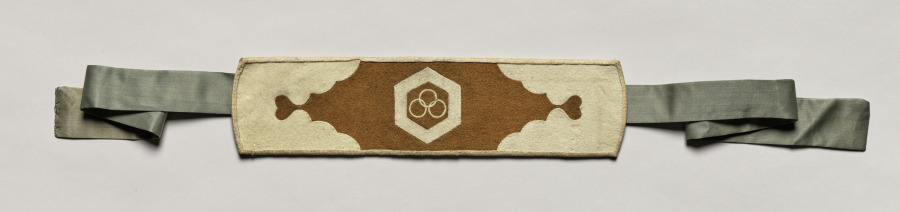
Sash for a Firefighter's Suit (Kaji shōzoku) (late 1700s) is in the Cleveland Museum of Art collection.
The work and its context
The museum's open-access catalogue describes the work:
Wood architecture in densely populated areas made firefighting a frequent occurrence in the Edo period (1615–1868). Jackets made of leather or wool offered firefighters protection against the flames. Wool was imported from Europe. The jacket's triple ring crest in white is of the “three alternating rings” (mitsurin chigai) type framed in a tortoise shell (kikko) motif, and identified the house with which the wearer was affiliated.
Object facts
- Title: Sash for a Firefighter's Suit (Kaji shōzoku)
- Date: late 1700s
- Culture: Japan, Edo period (1615–1868)
- Type: Textile
- Technique: Wool (rasha); applique and silk and gold thread cord
- Collection: Japanese Art
- Department: Japanese Art
- Accession number: 2020.423.c
A detail from the museum
Wool has self-extinguishing properties that protect the wearer from fire.
Collection credit
Gift of John C. Weber
View the collection record
See the museum's photographs and full catalogue entry. Catalogue text is reproduced from the Cleveland Museum of Art's open-access data, with HTML formatting removed. This object and its supplied image are designated CC0.
Sources
More in Lifestyle
Keep reading