Satyr Head (500s BCE): Art, History and Details
Satyr Head at the Cleveland Museum of Art: 500s BCE, terracotta. Explore the work's context, creator attribution and collection history.
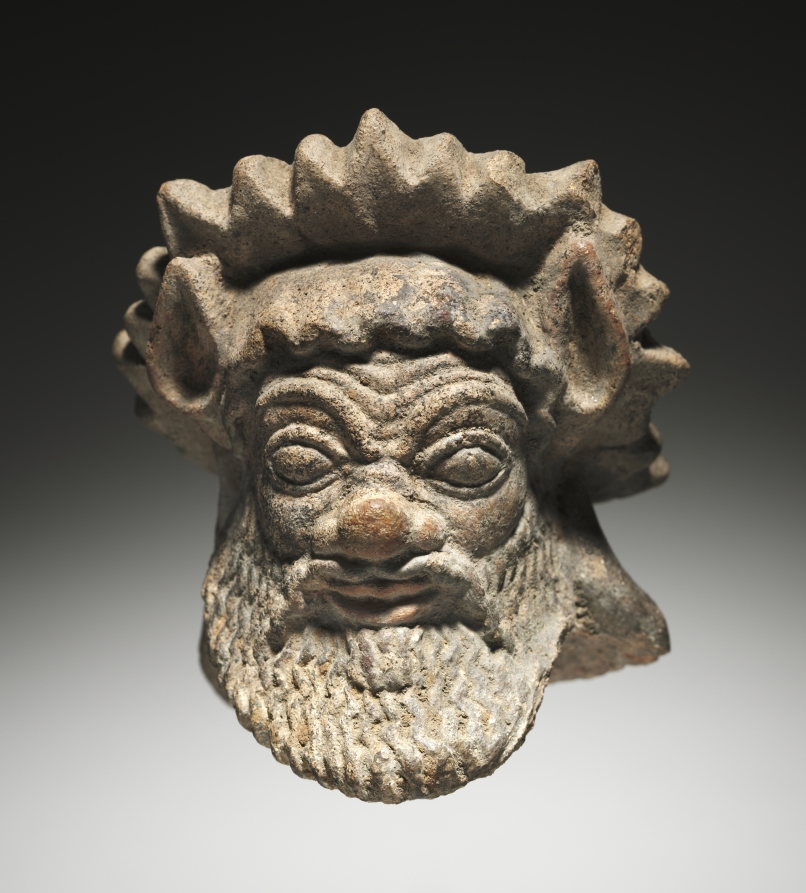
Satyr Head (500s BCE) is in the Cleveland Museum of Art collection.
The work and its context
The museum's open-access catalogue describes the work:
This head of an equine-eared satyr likely comes from a mold-made terracotta antefix. He has a wide nose, a furrowed brow, and almond-shaped eyes. Traces of pigment remain in the wavy incised beard and lips. A garland, perhaps made of pointed leaves, adorns the hair. It was likely part of a larger Etruscan temple antefix of an intertwined satyr and maenad because of its identical nature to other satyr heads from complete antefixes.
Object facts
- Title: Satyr Head
- Date: 500s BCE
- Culture: Etruscan
- Type: Sculpture
- Technique: terracotta
- Dimensions: Overall: 11.4 cm (4 1/2 in.)
- Collection: GR - Etruscan
- Department: Greek and Roman Art
- Accession number: 1925.946
A detail from the museum
Satyrs are nature spirits and followers of the wine god Dionysos.
Collection credit
Gift of J. H. Wade
View the collection record
See the museum's photographs and full catalogue entry. Catalogue text is reproduced from the Cleveland Museum of Art's open-access data, with HTML formatting removed. This object and its supplied image are designated CC0.
Sources
More in Lifestyle
Keep reading