Saucer with Inlaid Chrysanthemum Design (1200s): Art, History and Details
Saucer with Inlaid Chrysanthemum Design at the Cleveland Museum of Art: 1200s, pottery. Explore the work's context, creator attribution and collection history.
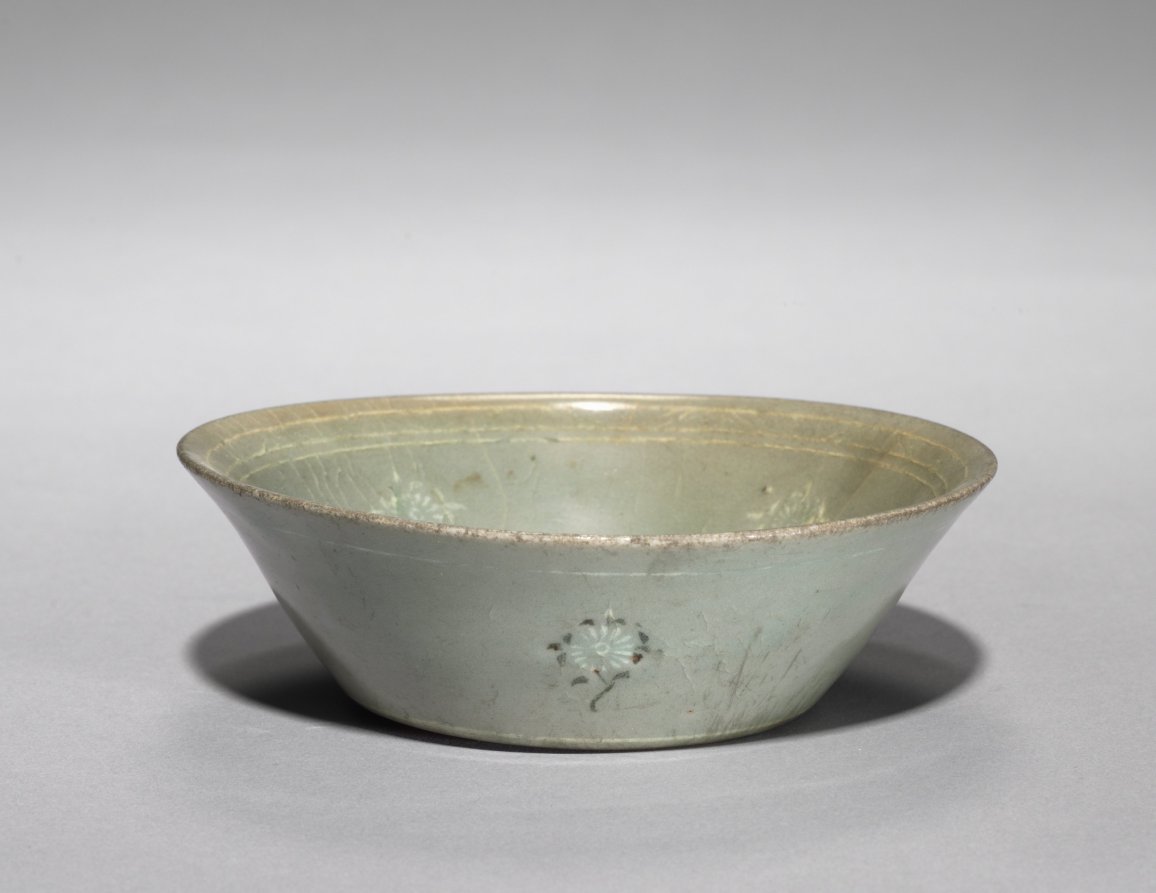
Saucer with Inlaid Chrysanthemum Design (1200s) is in the Cleveland Museum of Art collection.
The work and its context
The museum's open-access catalogue describes the work:
During the Goryeo period (918–1392), about 260 kilns operated in mainly Jeolla and Chungcheong provinces, meeting a high consumer demand. Celadon wares for everyday use such as this dish were among the most common burial objects in elites' tombs. Furnishing tombs with an elaborate assemblage of objects was believed to honor and comfort the newly dead. Generally, Goryeo tombs were left untouched until the late 19th century. During the colonial period (1910–45), however, Japanese archaeologists competitively excavated the tombs located in Kaeseong, the former capital of the Goryeo period, and these wares soon became available for Japanese and Western collectors.
Object facts
- Title: Saucer with Inlaid Chrysanthemum Design
- Date: 1200s
- Culture: Korea, Goryeo dynasty (918–1392)
- Type: Ceramic
- Technique: pottery
- Dimensions: Diameter of mouth: 13.5 cm (5 5/16 in.); Overall: 3.8 cm (1 1/2 in.)
- Collection: Korean Art
- Department: Korean Art
- Accession number: 1918.448
A detail from the museum
On the base of this tea bowl, three small spur marks made of bits of clay remain visible, indicating an individual protective casing of fire clay (saggar).
Collection credit
Gift of John L. Severance
Further reading listed by the museum
- Warner, Lorraine D'O. "Korean Grave Pottery of the Korai Dynasty." The Bulletin of the Cleveland Museum of Art 6, no. 3 (1919): 46-58.
- Goryeo Dynasty: Korea's Age of Enlightenment, 918-1392. San Francisco: Asian Art Museum, 2003.
- Lee, Young-hee. "The Study on Techniques and their Interrelations among Craft Arts of the Goryeo Dynasty [고려시대 공예기법 연구 상호관련성을 중심으로]." Misulsa hakbo 22 (2004): 133–170.
View the collection record
See the museum's photographs and full catalogue entry. Catalogue text is reproduced from the Cleveland Museum of Art's open-access data, with HTML formatting removed. This object and its supplied image are designated CC0.
Sources
More in Lifestyle
Keep reading