Savoyard Helmet (Todenkopf) (c. 1600–20): Art, History and Details
Savoyard Helmet (Todenkopf) at the Cleveland Museum of Art: c. 1600–20, steel, blackened. Explore the work's context, creator attribution and collection history.
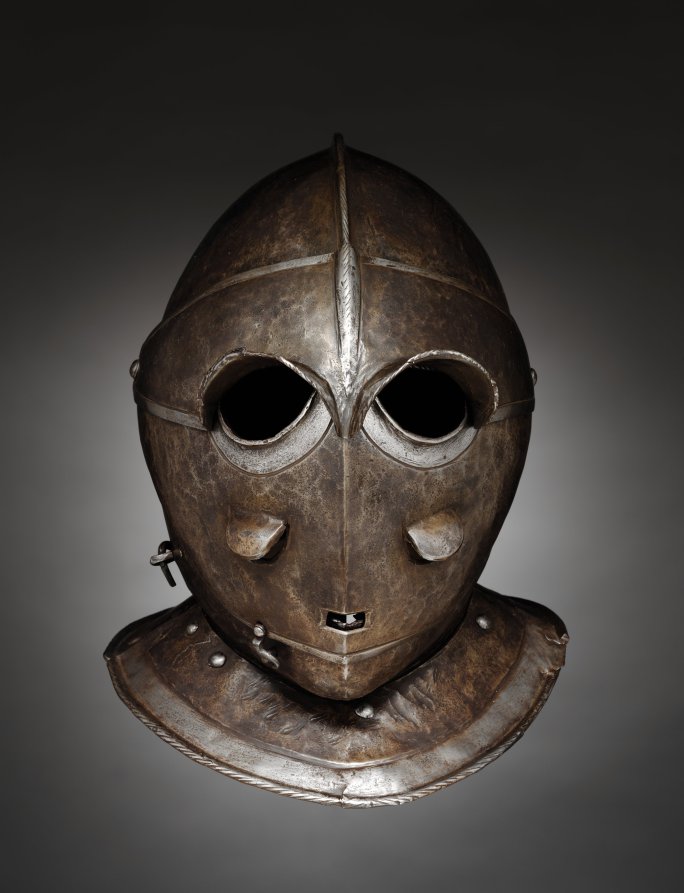
Savoyard Helmet (Todenkopf) (c. 1600–20) is in the Cleveland Museum of Art collection.
The work and its context
The museum's open-access catalogue describes the work:
The term “Savoyard helmet” is used today to evoke the elite cavalry units formed by Charles Emanuel I, Duke of Savoy (1580-1630). Such helmets were designed principally to withstand and protect the wearer from shot from the powerful wheel-lock guns of the day, though their secondary function was to intimidate and terrify. The design of the helmet suggests a human face or skull. They were known as todenkopf or “death’s head” helmets in Germany. The helmet would have originally been associated with a three-quarter cuirassier armor. Similar armors are displayed nearby.
Object facts
- Title: Savoyard Helmet (Todenkopf)
- Date: c. 1600–20
- Culture: Italy or Germany, early 17th century
- Type: Arms and Armor
- Technique: steel, blackened
- Dimensions: Overall: 30.5 cm (12 in.)
- Collection: MED - Arms & Armor
- Department: Medieval Art
- Accession number: 2013.50
A detail from the museum
This type of helmet is also called a "todenkopf," translating to "death's head."
Collection credit
Severance and Greta Millikin Trust
Further reading listed by the museum
- Lennart Viebahn. A Pair of Luxury Flintlock Pistols by Gilbert. 2009.
- Fliegel, Stephen. "2013 Acquisitions: Medieval Art". Cleveland Art: Cleveland Museum of Art Members Magazine 54, no. 2 (March/April 2014): 14.
View the collection record
See the museum's photographs and full catalogue entry. Catalogue text is reproduced from the Cleveland Museum of Art's open-access data, with HTML formatting removed. This object and its supplied image are designated CC0.
Sources
More in Lifestyle
Keep reading