Scenes from the Tale of Genji (1700s): Art, History and Details
Scenes from the Tale of Genji at the Cleveland Museum of Art: 1700s, Six-panel folding screen; ink, color, gold and gilding on paper. Explore the work's context, creator attribution and collection history.
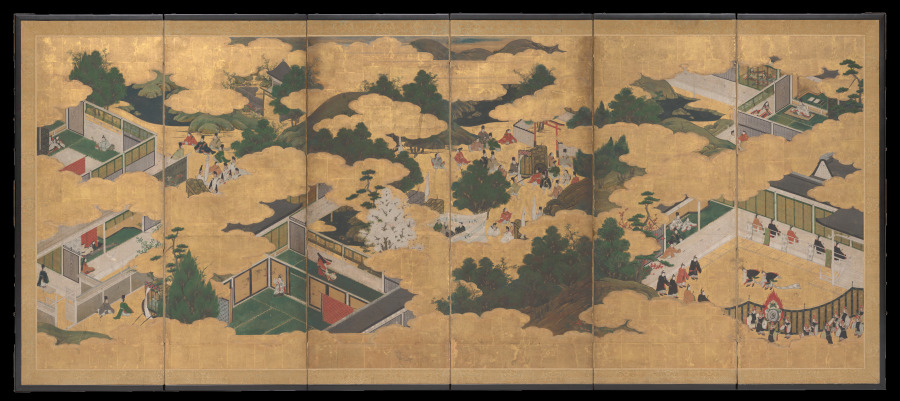
Scenes from the Tale of Genji (1700s) is in the Cleveland Museum of Art collection.
The work and its context
The museum's open-access catalogue describes the work:
Folding screens served as temporary dividers in traditional Japanese open-plan architectural spaces. This screen was inspired by Japan’s most celebrated work of literature, the Tale of Genji, written by Murasaki Shikibu, an attendant to the empress in the early 11th-century imperial court. The novel follows the love life of the “Shining Prince” Genji and delves into the psychological states of his many companions.
Object facts
- Title: Scenes from the Tale of Genji
- Date: 1700s
- Culture: Japan, Edo period (1615–1868)
- Type: Painting
- Technique: Six-panel folding screen; ink, color, gold and gilding on paper
- Dimensions: 123.8 x 289.6 cm (48 3/4 x 114 in.)
- Collection: ASIAN - Folding screen
- Department: Japanese Art
- Accession number: 2024.160
A detail from the museum
Distinct episodes are nestled within a matrix of golden clouds and landscape elements.
Collection credit
Gift of Ross W. Comer
View the collection record
See the museum's photographs and full catalogue entry. Catalogue text is reproduced from the Cleveland Museum of Art's open-access data, with HTML formatting removed. This object and its supplied image are designated CC0.
Sources
More in Lifestyle
Keep reading