Scepter in the Shape of a Ruyi Fungus (1700s): Art, History and Details
Scepter in the Shape of a Ruyi Fungus at the Cleveland Museum of Art: 1700s, carved boxwood. Explore the work's context, creator attribution and collection history.
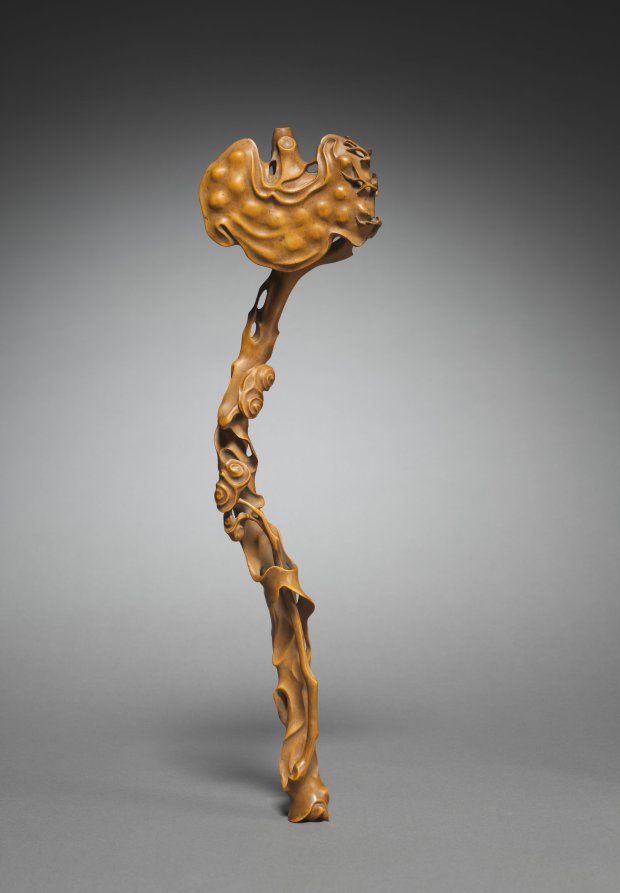
Scepter in the Shape of a Ruyi Fungus (1700s) is in the Cleveland Museum of Art collection.
The work and its context
The museum's open-access catalogue describes the work:
The ruyi scepter was among the decorative items collected by the Chinese literati. It was thought that lofty and refined men of ancient times—the Seven Sages of the Bamboo Grove of the late 200s CE—carried ruyi scepters during the so-called pure conversations of the Daoists. The name ruyi (literally, as one wishes) conveys blessings of wish fulfillment. The fungus-shaped head is an emblem of immortality.
Object facts
- Title: Scepter in the Shape of a Ruyi Fungus
- Date: 1700s
- Culture: China, Qing dynasty (1644-1911)
- Type: Wood
- Technique: carved boxwood
- Dimensions: Overall: 38.1 cm (15 in.)
- Collection: China - Qing Dynasty
- Department: Chinese Art
- Accession number: 1970.155
A detail from the museum
Boxwood is a small, slow-growing evergreen tree found in Southeast China and as far as Europe.
Collection credit
Cornelia Blakemore Warner Fund
Further reading listed by the museum
- Lee, Sherman E. “The Year in Review for 1970.” The Bulletin of the Cleveland Museum of Art, vol. 58, no. 2, 1971, pp. 22–71.
View the collection record
See the museum's photographs and full catalogue entry. Catalogue text is reproduced from the Cleveland Museum of Art's open-access data, with HTML formatting removed. This object and its supplied image are designated CC0.
Sources
More in Lifestyle
Keep reading