Seal with Two-Horned Bull and Inscription (c. 2000 BCE): Art, History and Details
Seal with Two-Horned Bull and Inscription at the Cleveland Museum of Art: c. 2000 BCE, steatite. Explore the work's context, creator attribution and collection history.
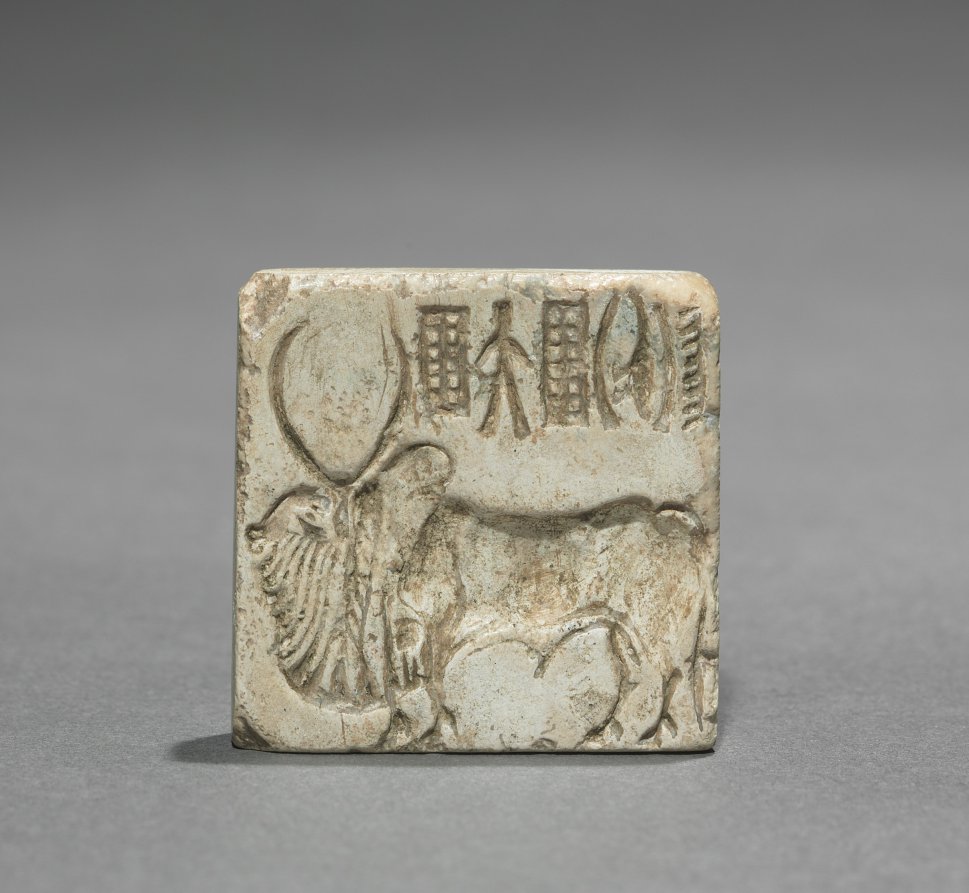
Seal with Two-Horned Bull and Inscription (c. 2000 BCE) is in the Cleveland Museum of Art collection.
The work and its context
The museum's open-access catalogue describes the work:
Small stone seals, probably used to identify merchandise or property, are among the most numerous objects discovered from the mysterious proto-historic sites along the banks of the Indus River system. Like these, most have sensitively rendered animal imagery along with an inscription written in a script that has not yet been deciphered.
Object facts
- Title: Seal with Two-Horned Bull and Inscription
- Date: c. 2000 BCE
- Culture: Pakistan, Indus Valley civilization
- Type: Seals
- Technique: steatite
- Dimensions: Overall: 3.2 x 3.2 cm (1 1/4 x 1 1/4 in.)
- Collection: Indian Art - Indus Valley
- Department: Indian and Southeast Asian Art
- Accession number: 1973.160
A detail from the museum
A perforated boss at the back allowed the seal to be suspended and easily pressed.
Collection credit
Purchase from the J. H. Wade Fund
Further reading listed by the museum
- "The Year in Review for 1973." The Bulletin of the Cleveland Museum of Art 61, no. 2 (1974): 31-78.
- The Cleveland Museum of Art. Handbook of the Cleveland Museum of Art/1978. Cleveland, OH: The Cleveland Museum of Art, 1978.
- Kathman, Barbara A. A Cleveland Bestiary. Cleveland, OH; Cleveland Museum of Art, 1981.
View the collection record
See the museum's photographs and full catalogue entry. Catalogue text is reproduced from the Cleveland Museum of Art's open-access data, with HTML formatting removed. This object and its supplied image are designated CC0.
Sources
More in Lifestyle
Keep reading
Related stories