Seal with Unicorn and Inscription (c. 2000 BCE): Art, History and Details
Seal with Unicorn and Inscription at the Cleveland Museum of Art: c. 2000 BCE, possibly kaolin. Explore the work's context, creator attribution and collection history.
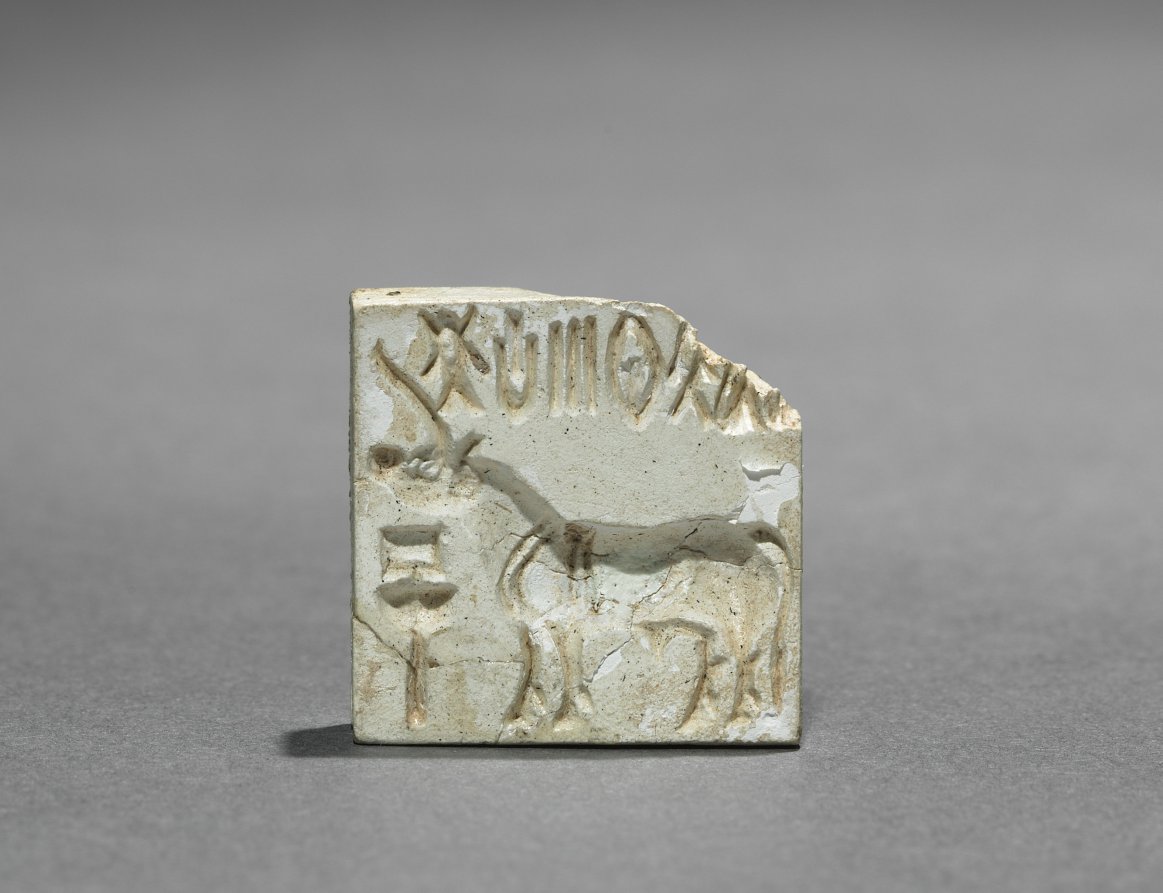
Seal with Unicorn and Inscription (c. 2000 BCE) is in the Cleveland Museum of Art collection.
The work and its context
The museum's open-access catalogue describes the work:
Small stone seals, probably used to identify merchandise or property, are among the most numerous objects surviving from the protohistoric urban sites along the banks of the Indus River system. This example has a bovine creature with one horn and one ear showing in profile, his head held over an altar-like object.
Object facts
- Title: Seal with Unicorn and Inscription
- Date: c. 2000 BCE
- Culture: Pakistan, Indus Valley civilization
- Type: Seals
- Technique: possibly kaolin
- Dimensions: Overall: 2.5 x 2.5 cm (1 x 1 in.)
- Collection: Indian Art - Indus Valley
- Department: Indian and Southeast Asian Art
- Accession number: 1964.104
A detail from the museum
Animals are the most popular motifs in the visual culture of the Indus Valley Civilization, shown much more often than human figures or cityscapes.
Collection credit
Purchase from the J. H. Wade Fund
View the collection record
See the museum's photographs and full catalogue entry. Catalogue text is reproduced from the Cleveland Museum of Art's open-access data, with HTML formatting removed. This object and its supplied image are designated CC0.
Sources
More in Lifestyle
Keep reading