Seal with Unicorn and Inscription (c. 2000 BCE): Art, History and Details
Seal with Unicorn and Inscription at the Cleveland Museum of Art: c. 2000 BCE, steatite. Explore the work's context, creator attribution and collection history.
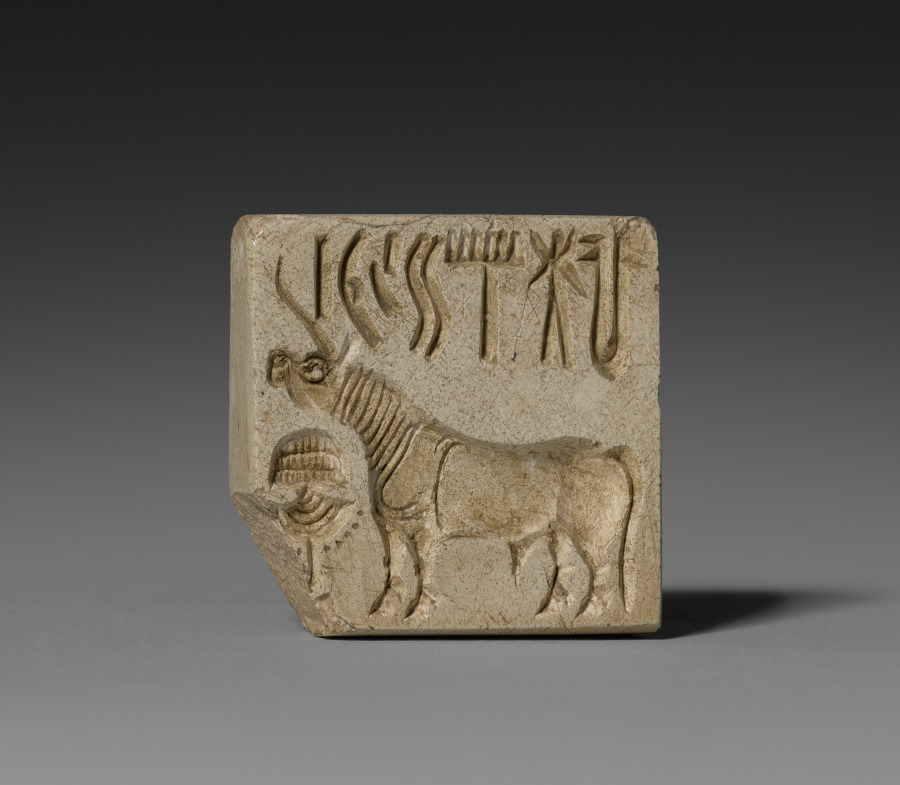
Seal with Unicorn and Inscription (c. 2000 BCE) is in the Cleveland Museum of Art collection.
The work and its context
The museum's open-access catalogue describes the work:
Indus Valley seals appear to have been hung on a string that passed through a boss on the reverse side. This animal, carved with detailed markings around his neck and forequarters, has his head positioned over an object on a stand that may be interpreted as an altar or brazier or censer; it is not known whether it is for offerings to or sacrifice of the animal.
Object facts
- Title: Seal with Unicorn and Inscription
- Date: c. 2000 BCE
- Culture: Pakistan, Indus Valley civilization
- Type: Seals
- Technique: steatite
- Dimensions: Overall: 3.5 x 3.6 cm (1 3/8 x 1 7/16 in.)
- Collection: Indian Art - Indus Valley
- Department: Indian and Southeast Asian Art
- Accession number: 1973.161
A detail from the museum
Specialists disagree as to whether single-horned bovines actually lived during the time of the Indus Valley Civilization, four thousand years ago.
Collection credit
Purchase from the J. H. Wade Fund
Further reading listed by the museum
- "The Year in Review for 1973." The Bulletin of the Cleveland Museum of Art 61, no. 2 (1974): 31-78.
- The Cleveland Museum of Art. Handbook of the Cleveland Museum of Art/1978. Cleveland, OH: The Cleveland Museum of Art, 1978.
- The Cleveland Museum of Art. Handbook of the Cleveland Museum of Art. Cleveland, OH: The Cleveland Museum of Art, 1991.
View the collection record
See the museum's photographs and full catalogue entry. Catalogue text is reproduced from the Cleveland Museum of Art's open-access data, with HTML formatting removed. This object and its supplied image are designated CC0.
Sources
More in Lifestyle
Keep reading
Related stories