Seated Deity (1350–1519): Art, History and Details
Seated Deity at the Cleveland Museum of Art: 1350–1519, gray volcanic stone with red pigment. Explore the work's context, creator attribution and collection history.
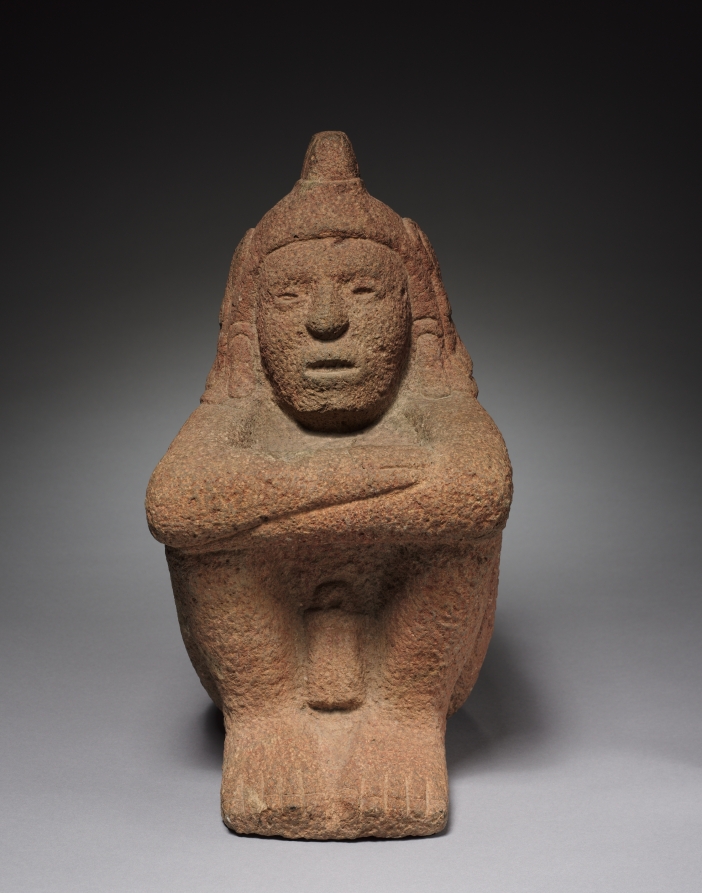
Seated Deity (1350–1519) is in the Cleveland Museum of Art collection.
The work and its context
The museum's open-access catalogue describes the work:
The crested headdress with tassels suggests that this youthful, seated male is Macuilxochitl (Five Flower), an Aztec supernatural patron of many forms of pleasure, among them music, dance, feasting, games, and sex. His cult was popular among common people, and this effigy probably was created for use in a small neighborhood temple. The stone surface could have been plastered and then brightly painted.
Object facts
- Title: Seated Deity
- Date: 1350–1519
- Culture: Mexico, Aztec, Valley of Mexico near Teotihuacan, Macuilxochitl (?), 14th-16th century
- Type: Sculpture
- Technique: gray volcanic stone with red pigment
- Dimensions: Overall: 37.5 x 20.3 x 24.8 cm (14 3/4 x 8 x 9 3/4 in.)
- Collection: AA - Mesoamerica
- Department: Art of the Americas
- Accession number: 1990.136
A detail from the museum
The Aztecs associated the number 5 with excess: there were five gods of pleasure, one named “Five Flower.”
Collection credit
Gift of Mr. and Mrs. James C. Gruener
Further reading listed by the museum
- Young-Sánchez, Margaret. "The Gruener Collection of Pre-Columbian Art." The Bulletin of the Cleveland Museum of Art 79, no. 7 (1992): 234-75.
View the collection record
See the museum's photographs and full catalogue entry. Catalogue text is reproduced from the Cleveland Museum of Art's open-access data, with HTML formatting removed. This object and its supplied image are designated CC0.
Sources
More in Lifestyle
Keep reading