Seated Sakyamuni Buddha (500s–600s): Art, History and Details
Seated Sakyamuni Buddha at the Cleveland Museum of Art: 500s–600s, stone. Explore the work's context, creator attribution and collection history.
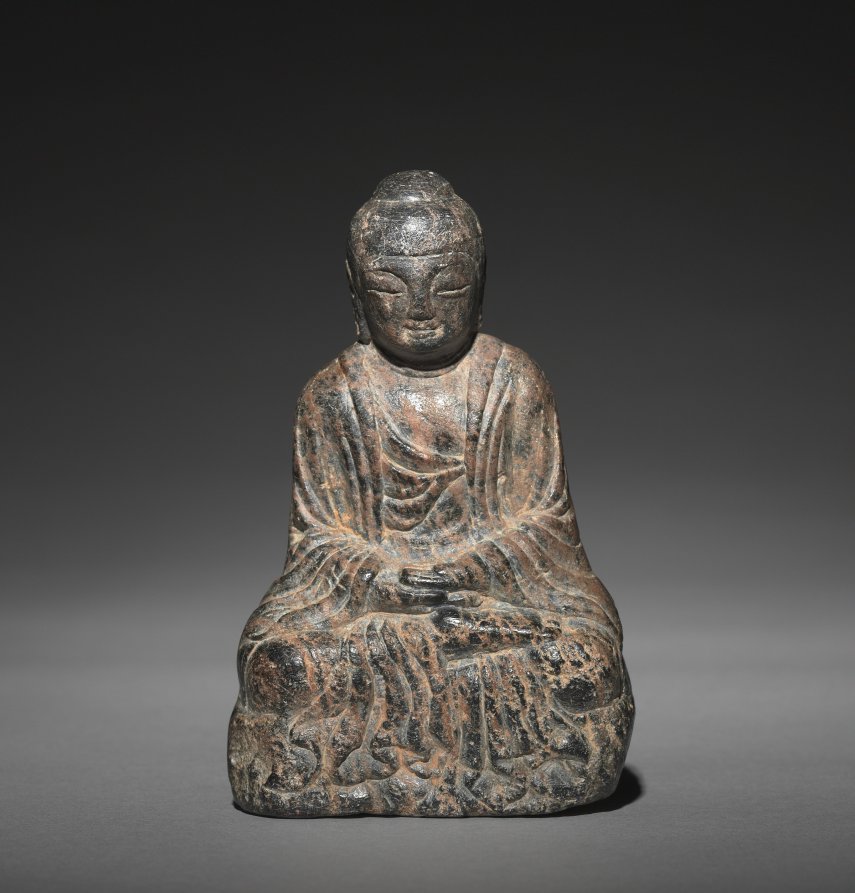
Seated Sakyamuni Buddha (500s–600s) is in the Cleveland Museum of Art collection.
The work and its context
The museum's open-access catalogue describes the work:
Created during the Unified Silla period, a high point of the spread of Buddhist teachings, this kind of miniature statue was often used as a portable object of devotion by traveling Buddhist monks. This particular Buddhist statue is very similar in style and size to the one in the collection of the National Museum of Korea. See it in the following link: https://www.museum.go.kr/site/main/relic/search/view?relicId=1926
Object facts
- Title: Seated Sakyamuni Buddha
- Date: 500s–600s
- Culture: Korea, Three Kingdoms period (57 BCE–668 CE)
- Type: Sculpture
- Technique: stone
- Dimensions: Overall: 11.4 x 7.6 x 7 cm (4 1/2 x 3 x 2 3/4 in.)
- Collection: Korean Art
- Department: Korean Art
- Accession number: 1987.188
A detail from the museum
This seated Buddhist deity is Shakyamuni, the founder of Buddhism.
Collection credit
John L. Severance Fund
Further reading listed by the museum
- Turner, Evan H. “The Year in Review for 1987.” The Bulletin of the Cleveland Museum of Art 75, no. 2 (February 1988): 30–71.
View the collection record
See the museum's photographs and full catalogue entry. Catalogue text is reproduced from the Cleveland Museum of Art's open-access data, with HTML formatting removed. This object and its supplied image are designated CC0.
Sources
More in Lifestyle
Keep reading