Seated Yaksha (300s CE): Art, History and Details
Seated Yaksha at the Cleveland Museum of Art: 300s CE, terracotta. Explore the work's context, creator attribution and collection history.
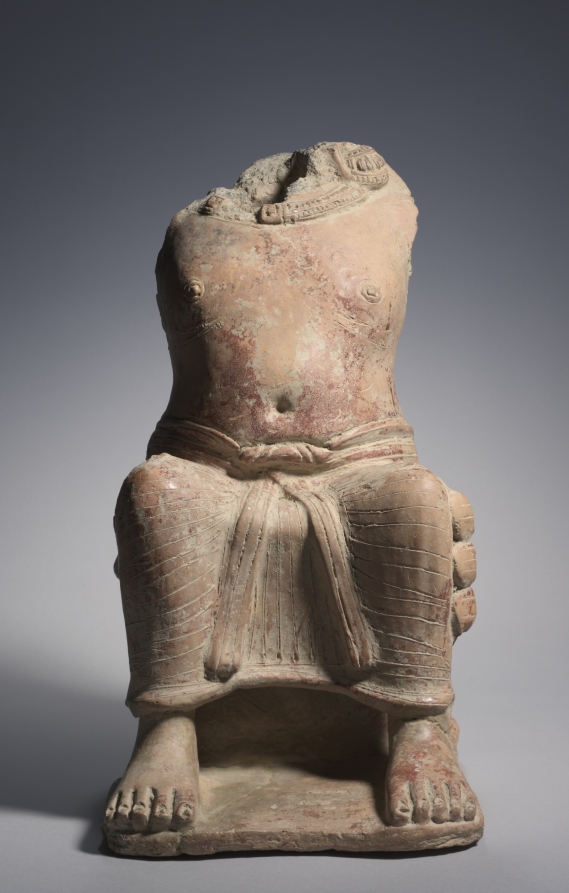
Seated Yaksha (300s CE) is in the Cleveland Museum of Art collection.
The work and its context
The museum's open-access catalogue describes the work:
The power and frontality of this figure, whose bare feet are planted firmly on the ground, along with the corpulence of his protruding belly, suggest that the image may represent Kubera, or a yaksha worshiped for wealth and prosperity. Terracottas of large size like this one were usually modeled freely and incised with a wire tool.
Object facts
- Title: Seated Yaksha
- Date: 300s CE
- Culture: Northern India, Uttar Pradesh, probably Kaushambi
- Type: Sculpture
- Technique: terracotta
- Dimensions: Overall: 47.3 x 26 cm (18 5/8 x 10 1/4 in.)
- Collection: Indian Art - Kushan, Mathura
- Department: Indian and Southeast Asian Art
- Accession number: 1977.175
A detail from the museum
The figure wears a heavy, short necklace and originally wore earrings, of which only the left one remains.
Collection credit
John L. Severance Fund
Further reading listed by the museum
- "Annual Report for 1977." The Bulletin of the Cleveland Museum of Art 65, no. 6 (1978): 177-215.
- Czuma, Stanislaw J., and Rekha Morris. Kushan Sculpture: Images from Early India. Cleveland, OH: The Cleveland Museum of Art in cooperation with Indiana University Press, 1985.
View the collection record
See the museum's photographs and full catalogue entry. Catalogue text is reproduced from the Cleveland Museum of Art's open-access data, with HTML formatting removed. This object and its supplied image are designated CC0.
Sources
More in Lifestyle
Keep reading
Related stories