Severed Head Effigy Vessel (c. 100–350 CE): Art, History and Details
Severed Head Effigy Vessel at the Cleveland Museum of Art: c. 100–350 CE, earthenware with colored slips. Explore the work's context, creator attribution and collection history.
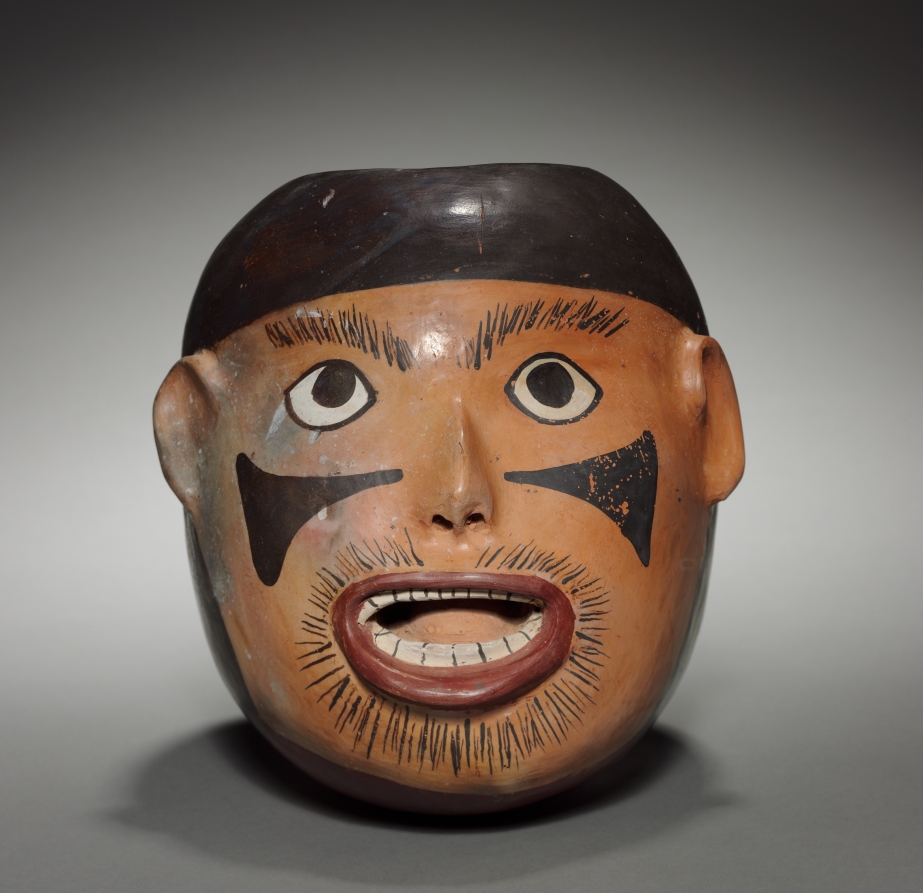
Severed Head Effigy Vessel (c. 100–350 CE) is in the Cleveland Museum of Art collection.
The work and its context
The museum's open-access catalogue describes the work:
The Nasca people were organized politically into small, competing chiefdoms, and warfare was common. This vessel represents a freshly severed human head (probably that of a captured and sacrificed prisoner) with staring eyes, gaping mouth, and blood-red underside. Modeling of the mouth cavity, tongue, and teeth lends the image a startling realism. Human sacrifice by decapitation was a central element of Nasca religion, essential to agricultural fertility. Severed heads were emptied and dried, then pierced through the forehead and suspended from a thick cord. Such preserved heads have been recovered from offering deposits and from tombs, where they were buried with their captors.
Object facts
- Title: Severed Head Effigy Vessel
- Date: c. 100–350 CE
- Culture: Peru, South Coast, Nasca
- Type: Ceramic
- Technique: earthenware with colored slips
- Dimensions: Overall: 22 x 20.5 x 24.5 cm (8 11/16 x 8 1/16 x 9 5/8 in.)
- Collection: AA - Andes
- Department: Art of the Americas
- Accession number: 1997.2
Collection credit
James Albert and Mary Gardiner Ford Memorial Fund
Further reading listed by the museum
- Cleveland Museum of Art, “Major Neoclassical Marble, Rare Korean Sculpture, Other Recent CMA Acquisitions Now on View,” April 16, 1997, Cleveland Museum of Art Archives.
View the collection record
See the museum's photographs and full catalogue entry. Catalogue text is reproduced from the Cleveland Museum of Art's open-access data, with HTML formatting removed. This object and its supplied image are designated CC0.
Sources
More in Lifestyle
Keep reading