Shakyamuni (c. 900): Art, History and Details
Shakyamuni at the Cleveland Museum of Art: c. 900, wood with lacquer and traces of color. Explore the work's context, creator attribution and collection history.
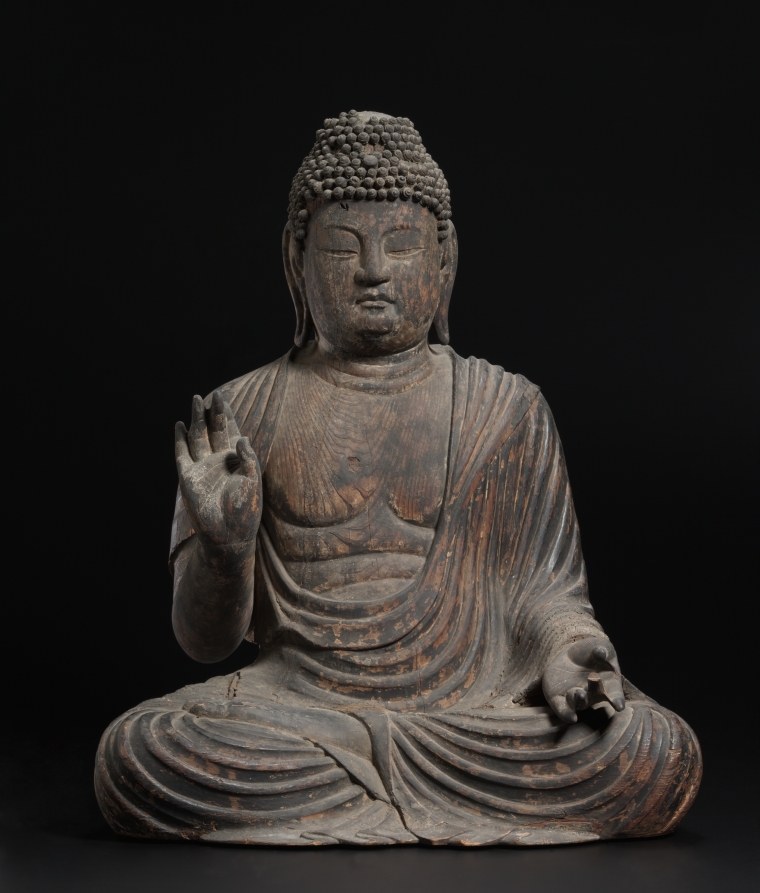
Shakyamuni (c. 900) is in the Cleveland Museum of Art collection.
The work and its context
The museum's open-access catalogue describes the work:
This image of Shakyamuni, the Buddha, or “awakened one,” who lived during the 500s or 400s BCE, is carved from one piece of wood. The distinctive pattern of thick, raised garment folds is characteristic of Japanese Buddhist sculpture of the 800s and 900s. Shakyamuni’s elongated ears and curled hair are among the physical attributes described in sacred texts that distinguish him as a Buddha.
Object facts
- Title: Shakyamuni
- Date: c. 900
- Culture: Japan, Heian period (794–1185)
- Type: Sculpture
- Technique: wood with lacquer and traces of color
- Dimensions: 57.2 x 46.4 x 38.1 cm (22 1/2 x 18 1/4 x 15 in.)
- Collection: Japanese Art
- Department: Japanese Art
- Accession number: 1986.7
Collection credit
Leonard C. Hanna Jr. Fund
Further reading listed by the museum
- Turner, Evan H. “The Year in Review for 1986.” The Bulletin of the Cleveland Museum of Art, vol. 74, no. 2, 1987, pp. 38–79.
- “Art of Asia Acquired by North American Museums, 1987.” Archives of Asian Art 41 (1988): 95–110.
View the collection record
See the museum's photographs and full catalogue entry. Catalogue text is reproduced from the Cleveland Museum of Art's open-access data, with HTML formatting removed. This object and its supplied image are designated CC0.
Sources
More in Lifestyle
Keep reading