Shalabhanjika (Woman and Tree) (300s–400s CE): Art, History and Details
Shalabhanjika (Woman and Tree) at the Cleveland Museum of Art: 300s–400s CE, gray steatite. Explore the work's context, creator attribution and collection history.
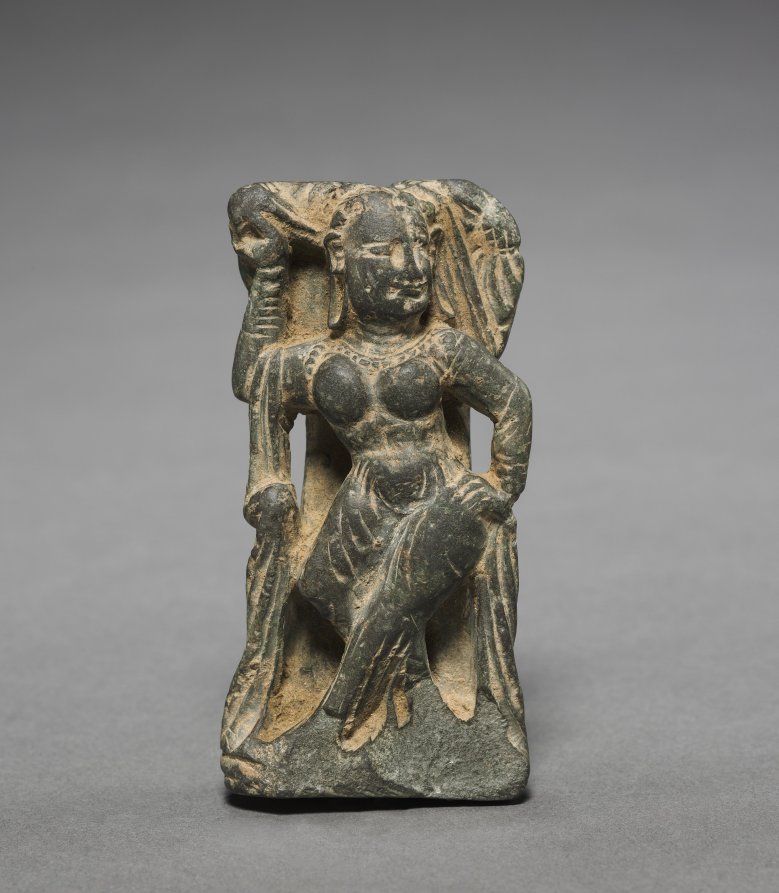
Shalabhanjika (Woman and Tree) (300s–400s CE) is in the Cleveland Museum of Art collection.
The work and its context
The museum's open-access catalogue describes the work:
The full carving of a flowering tree on the back of this figurine indicates that she is a figure of a nature divinity who personifies the life-giving qualities of the sap that envigorates the tree and causes it to flower. These figures are sometimes called shalabhanjika, "she who breaks the tree," probably because her fertile properties are so powerful that it causes the tree to fruit so heavily that the branches break.
Object facts
- Title: Shalabhanjika (Woman and Tree)
- Date: 300s–400s CE
- Culture: Northern India, Kashmir
- Type: Sculpture
- Technique: gray steatite
- Dimensions: Overall: 8 cm (3 1/8 in.)
- Collection: Indian Art
- Department: Indian and Southeast Asian Art
- Accession number: 1974.74
Collection credit
James Parmelee Fund
View the collection record
See the museum's photographs and full catalogue entry. Catalogue text is reproduced from the Cleveland Museum of Art's open-access data, with HTML formatting removed. This object and its supplied image are designated CC0.
Sources
More in Lifestyle
Keep reading