Shawabty of Ditamenpaankh (715–656 BCE): Art, History and Details
Shawabty of Ditamenpaankh at the Cleveland Museum of Art: 715–656 BCE, terracotta. Explore the work's context, creator attribution and collection history.
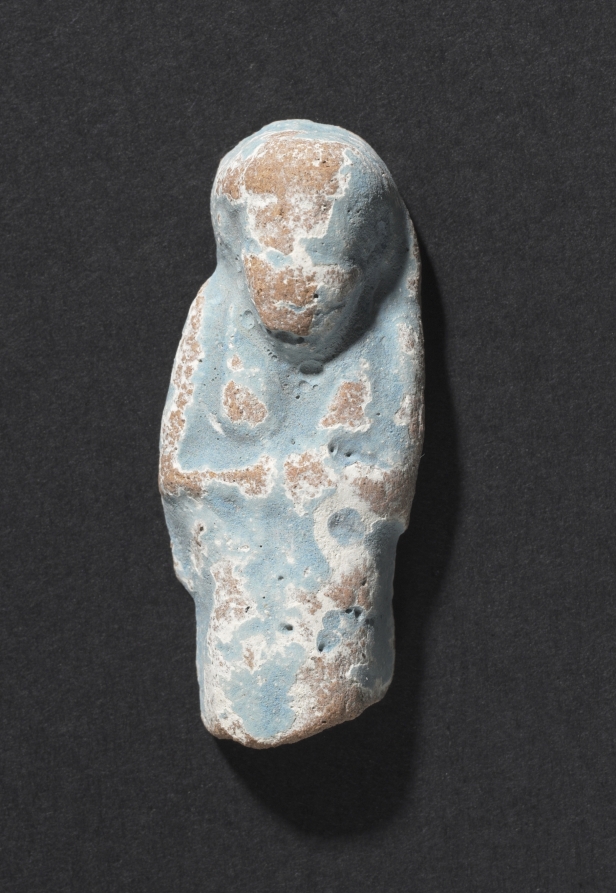
Shawabty of Ditamenpaankh (715–656 BCE) is in the Cleveland Museum of Art collection.
The work and its context
The museum's open-access catalogue describes the work:
High demand for shawabtys in the Late Period (when as many as 400 or more shawabtys were placed in a tomb), gave rise to a specialized container for storing them. This shawabty box was probably one of a pair originally made for the lady Ditamenpaankh. The single-masted boat on the lid may refer to the pilgrimage of the deceased to the holy city of Abydos, the cult city of Osiris, king of the dead. The sides are inscribed with the traditional shawabty spell charging the funerary servants with their duties. The shawabtys inside are crude, mass-produced examples that were cast in an open mold. Made of terracotta, their blue paint imitates more costly shawabtys made of faience.
Object facts
- Title: Shawabty of Ditamenpaankh
- Date: 715–656 BCE
- Culture: Egypt, Late period (715–332 BCE), Dynasty 25
- Type: Funerary Equipment
- Technique: terracotta
- Dimensions: Overall: 4.1 x 1.6 x 1 cm (1 5/8 x 5/8 x 3/8 in.)
- Collection: Egypt - Late Period
- Department: Egyptian and Ancient Near Eastern Art
- Accession number: 1914.718.38
Collection credit
Gift of the John Huntington Art and Polytechnic Trust
Further reading listed by the museum
- Berman, Lawrence M., and Kenneth J. Bohač. Catalogue of Egyptian Art: The Cleveland Museum of Art. Cleveland, OH: Cleveland Museum of Art, 1999
View the collection record
See the museum's photographs and full catalogue entry. Catalogue text is reproduced from the Cleveland Museum of Art's open-access data, with HTML formatting removed. This object and its supplied image are designated CC0.
Sources
More in Lifestyle
Keep reading


