Shawl with boteh (1820–1830): Art, History and Details
Shawl with boteh at the Cleveland Museum of Art: 1820–1830, 2/2 twill tapestry weave, double interlocked: wool, possibly pashmina. Explore the work's context, creator attribution and collection history.
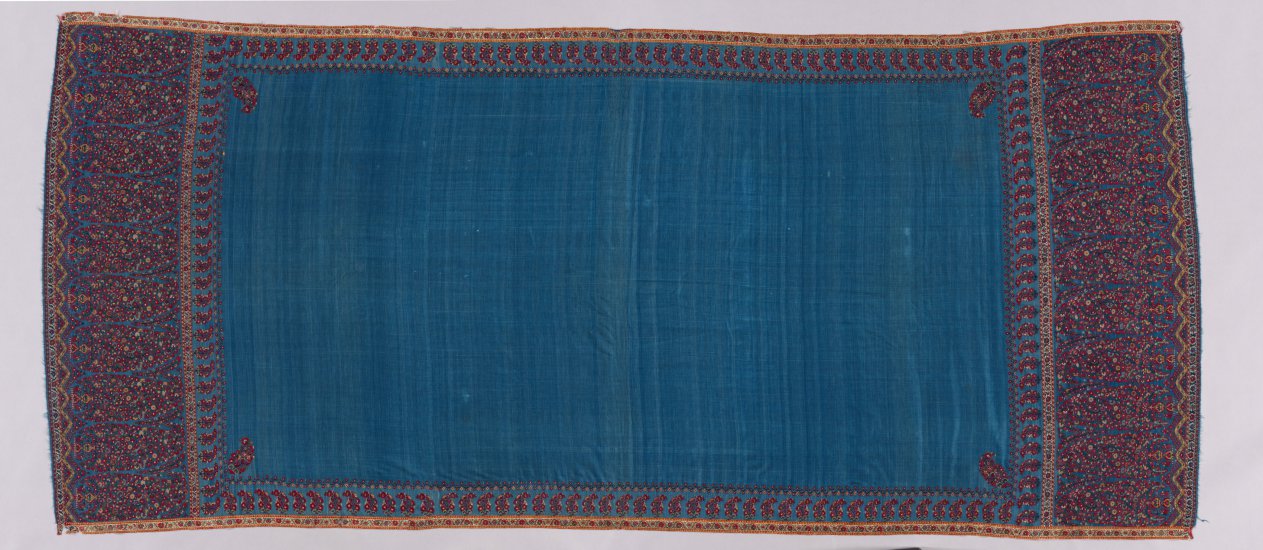
Shawl with boteh (1820–1830) is in the Cleveland Museum of Art collection.
The work and its context
The museum's open-access catalogue describes the work:
Thousands of luxurious shawls imported from Kashmir, India, were status symbols that European-manufactured imitations could not equal. Those woven in Paisley, Scotland, gave rise to the popular term paisley. Their representation in portraits records the evolution of shawl fashions, which helps to date surviving examples. The coveted quality of Kashmir shawls was achieved with luxurious fine goat hair woven in twill tapestry to form small colorful blossoms. Such shawls are lightweight, supple, and warm. A plethora of blossoms arranged in small vases on stands form the large paisley or boteh motifs, while smaller versions enliven the sides of the field. Such floral displays evolved from blossoming plants possibly in 16th-century India.
Object facts
- Title: Shawl with boteh
- Date: 1820–1830
- Culture: India, Kashmir
- Type: Textile
- Technique: 2/2 twill tapestry weave, double interlocked: wool, possibly pashmina
- Dimensions: Overall: 325 x 136.5 cm (127 15/16 x 53 3/4 in.)
- Collection: T - Islamic
- Department: Textiles
- Accession number: 1952.190
Collection credit
Gift of Mrs. Arthur Loesser
Further reading listed by the museum
- Mackie, Louise W. Symbols of Power: Luxury Textiles from Islamic Lands, 7th-21st Century. Cleveland; New Haven: Cleveland Museum of Art; Yale University Press, 2015.
View the collection record
See the museum's photographs and full catalogue entry. Catalogue text is reproduced from the Cleveland Museum of Art's open-access data, with HTML formatting removed. This object and its supplied image are designated CC0.
Sources
More in Lifestyle
Keep reading