Shimla (1865): Art, History and Details
Shimla at the Cleveland Museum of Art: 1865, waxed paper negative. Explore the work's context, creator attribution and collection history.
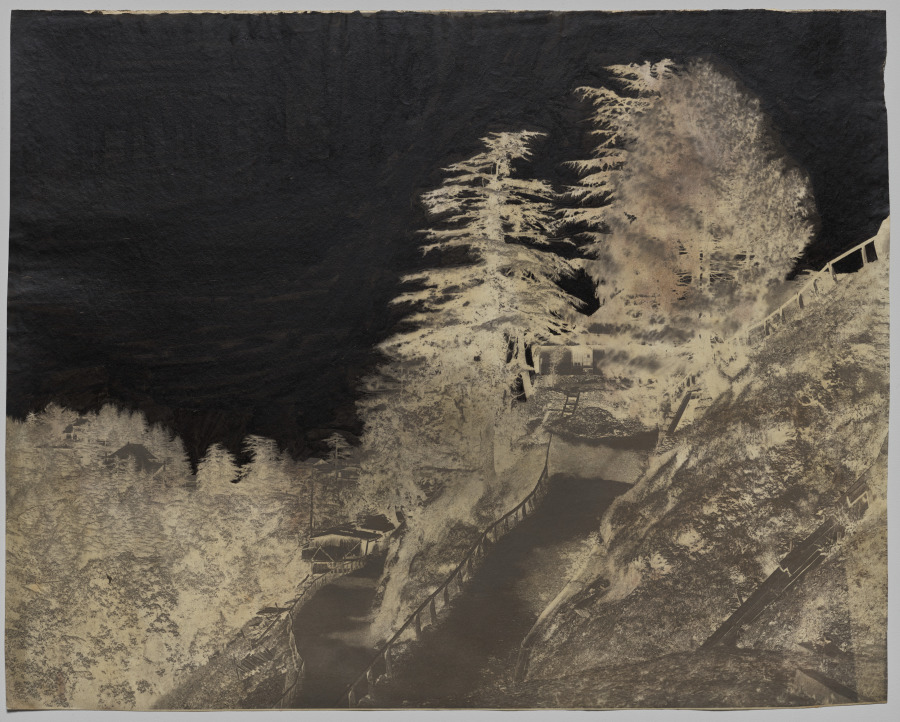
Shimla (1865) is in the Cleveland Museum of Art collection. The museum's creator attribution is Dr. John Murray (Scottish, 1809–1898).
The work and its context
The museum's open-access catalogue describes the work:
Before digital photography, most cameras yielded a negative, an image in which the tones are the reverse of those in the original subject. Early photographers shot on sheets of paper that were waxed to make them more translucent, then coated with a light-sensitive solution and exposed in the camera. To create a positive image, light was passed through the negative onto light-sensitive paper, which was developed in a series of chemical baths to create the print.
Object facts
- Title: Shimla
- Date: 1865
- Creator attribution: Dr. John Murray (Scottish, 1809–1898)
- Culture: England
- Type: Photograph
- Technique: waxed paper negative
- Dimensions: Image: 38 x 48.2 cm (14 15/16 x 19 in.); Paper: 38 x 48.2 cm (14 15/16 x 19 in.)
- Collection: PH - British 19th Century
- Department: Photography
- Accession number: 2021.206
A detail from the museum
Simla, a town in the Himalayan foothills, became the summer capital of British colonial India in 1864.
Collection credit
Gift of William and Margaret Lipscomb
View the collection record
See the museum's photographs and full catalogue entry. Catalogue text is reproduced from the Cleveland Museum of Art's open-access data, with HTML formatting removed. This object and its supplied image are designated CC0.
Sources
More in Lifestyle
Keep reading